Anvil vs Bypass Secateurs: Which is Best for Weak Hands?
As an Amazon Associate I earn from qualifying purchases. This page contains affiliate links — if you buy through them, I earn a small commission at no extra cost to you.
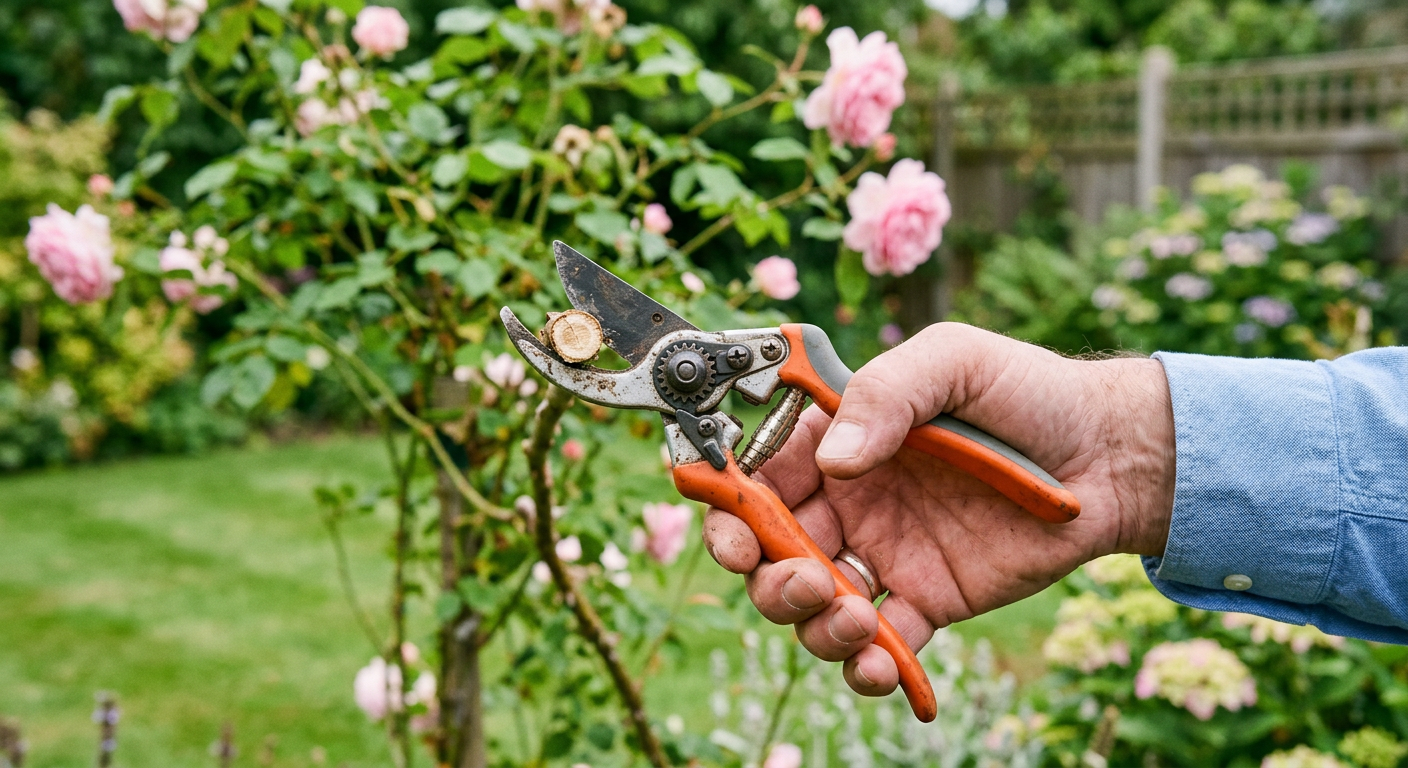
Ask most gardeners which secateurs are the “tough” ones and they’ll point at the anvil pair – thick blade, flat plate, looks like it means business. For anyone with a weak or arthritic grip, that instinct is exactly backwards. The heavier-looking tool is usually the one that punishes your hand hardest, because a crushing cut concentrates all the force in one place rather than spreading it along a blade. Swapping from an anvil to a bypass blade changes how that pressure is distributed, and adding a ratchet mechanism divides one hard squeeze into several light ones. Here is the honest breakdown of which secateurs actually take the ache out of the job, and why the mechanism matters far more than how “heavy-duty” a tool looks on the shelf.
What is the mechanical difference between bypass and anvil secateurs?
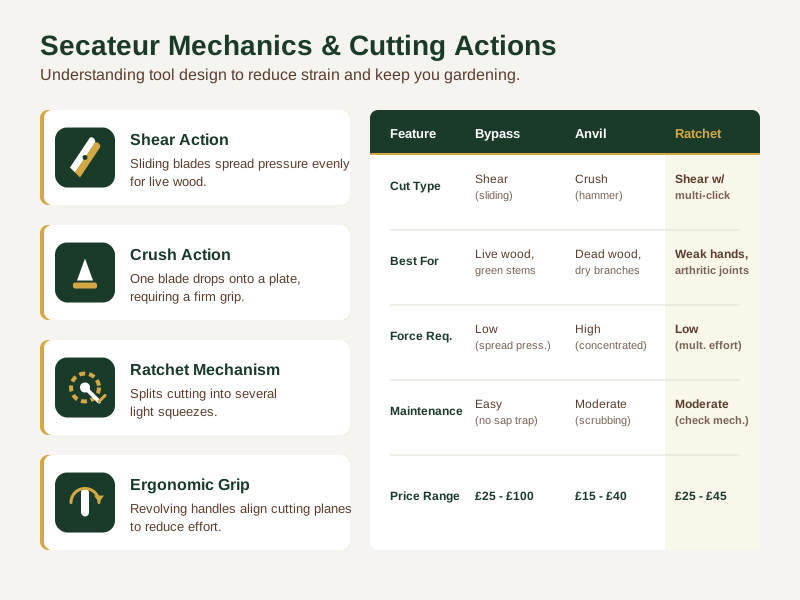
Bypass secateurs cut like scissors, sliding two blades past each other to spread the pressure evenly, which is ideal for live wood. Anvil secateurs crush the stem against a flat metal plate like a hammer on an anvil, requiring a much firmer, fist-like grip that quickly tires weak hands.
Because the cutting action of a bypass is a shear rather than a crush, the force you need to apply is spread over the whole length of the blade. In practice, that means the hand can stay relatively relaxed – the fingers form a natural “V” grip and you’re not forced into a clenched claw.
Anvil secateurs, on the other hand, drop one blade onto a flat steel plate. That design gives the impression of being heavy‑duty, but it concentrates the pressure on a single point and forces the hand into a tight squeeze. For anyone with arthritic joints or a weak grip, that extra force can be the difference between a smooth snip and a painful cramp. This lines up with the general consensus among UK gardening authorities, including the RHS, that bypass tools are the sensible default for healthy, live stems, to avoid crushing and damaging the plant tissue.
A plain bypass without a rotating handle still asks the wrist to twist and align with every stem, which is exactly where a tired grip starts to throb after a few cuts. A bypass with a rotating handle lets the blade follow the stem instead, so the forearm can rest and the cut on a 1‑inch rose cane stays clean without white knuckles.
Bottom line: for live wood and for anyone whose grip tires quickly, bypass secateurs require less hand strength. Anvils still have a place when you’re dealing with dry, dead wood where a crushing cut is acceptable.
Why are ratchet secateurs the best choice for weak hands?
Ratchet secateurs are the best choice for weak hands because the mechanism splits the work of cutting a branch into three to six light squeezes instead of one hard one. The hand never has to generate the full closing force in a single motion, preventing your wrist and knuckles from locking up under strain.
📺 Watch: Secateurs - Buyer's Guide — BBC Gardeners’ World Magazine
The mechanism clicks after a gentle squeeze, holding the blades in a biting position. You then open your hand slightly, squeeze again, the ratchet advances, and you repeat until the cut is complete. Each click multiplies your effort, so a thick branch that would normally demand a firm grip can be dealt with using a series of gentle presses. Arthritis UK makes exactly this point in its own gardening guidance: a ratchet pruner takes less effort than most secateurs because it takes several small bites instead of one big squeeze, reducing strain on the knuckles.
The clicking sound is a feature, not a bug; it tells you the mechanism has engaged and you can relax before the next squeeze.
In the UK market, ratchet models are easy to find. Spear & Jackson’s twist‑handle Ratchet Anvil is the budget entry point, while Fiskars PowerGear and the Felco 7 (paid link) provide premium geared or revolving handles higher up the price range. All are stocked by B&Q, Dobbies, and Amazon UK, so you won’t need to hunt overseas for a spare part.
Buy Felco 7 on Amazon → (paid link)
A quick note – ratchet secateurs tend to cut a little slower than a plain bypass because the mechanism adds a tiny pause between clicks. If you’re pruning a large hedge, expect a few extra seconds, but the trade‑off is far less strain on the hand.
On a branch as thick as 1‑inch birch, a ratchet’s first click takes the initial bite, and by the third click the branch is cleanly severed without the knuckles ever turning white. It feels almost like cheating, but the physics are spot on.
For more on why ratchets are a sensible choice for arthritis‑related grip issues, see the broader tool guides over on the blog.
UK‑Specific Recommendations: Lightweight Models
Fiskars PowerGear – the “rolling” wonder
The PowerGear line adds a rolling handle that pivots as you squeeze, effectively lengthening the lever arm without adding weight. Fiskars’ own figures put the gear’s mechanical advantage at roughly three times a standard pruner, meaning a light grip can still close the blades on 1‑inch stems. It’s widely available on Amazon UK and in most garden centres, typically somewhere in the £30–£45 bracket depending on the exact model and retailer. The only downside is the plastic housing can feel a touch flimsy if you’re using it on very thick, gnarled wood.
Spear & Jackson Razorsharp Advance Ratchet Anvil, twist handle – budget‑friendly with a genuine ratchet
Worth being precise here, because Spear & Jackson sell more than one “geared” secateur, and only one of them actually ratchets. It’s the Ratchet Anvil model with the twist handle you want, not the plain Geared Anvil – that one multiplies force in a single continuous squeeze rather than holding the bite between clicks, which rather defeats the point for a tired grip. At roughly £20–£30, the twist‑handle ratchet version gives you the click‑and‑release action without the premium price tag: four short steps per full closure, per the manufacturer’s own spec. It’s a solid choice for winter pruning of dead branches where the crushing action of an anvil is acceptable, and it carries a 10‑year guarantee – worth keeping your receipt for, as with any tool you might one day need to claim on.
Felco 7 – the premium, lifetime‑investment bypass
The Felco 7 sports a revolving handle that aligns the cutting planes perfectly; Felco’s own figures put the saving at up to 30 per cent less effort compared with a static bypass. The steel blades stay razor‑sharp for years, and the ergonomic rubberised grip stays warm in a British winter. Pricing varies noticeably by retailer – expect somewhere from the low £60s upwards, closer to £90 at some stockists. It costs more than the budget options, but the build quality means you won’t be replacing it after a season or two.
Budget note – if you’re skint, the Spear & Jackson is the honest pick; it does the job and the ratchet saves the hand, but be prepared for a slightly heavier feel and a less refined finish.
When you’ve narrowed down which mechanism suits you, the next logical step is to compare the specifics – price, weight, number of ratchet clicks, and warranty. That’s exactly what the free checklist does, so you can see the differences side‑by‑side without guessing.
Download the Free Easier Gardening Tool Checklist and make an informed choice without the faff.
How to test secateurs for grip strain
If you are heading to a garden centre to try a few pairs out, here is how to check if they will actually help your hands:
1. Check the resting span Hold the secateurs in your bare hand and let them spring fully open. If you have to stretch your fingers uncomfortably wide just to reach the bottom handle, they are too big and will strain your thumb joint on every single cut.
2. Test the locking catch Try to lock and unlock the secateurs using only your cutting hand. If the catch is stiff or requires you to use your other hand to pry it open, it’s going to be a constant annoyance when your fingers are cold or tired.
3. Squeeze the ratchet empty If testing a ratchet model, squeeze it through its clicks without cutting anything. The mechanism should catch positively at each stage without requiring you to force it. If it feels gritty or skips, put it back on the shelf.
Frequently Asked Questions
Are ratchet secateurs good for live wood?
Yes – they handle green stems well, especially when paired with bypass blades. For very thick, dry branches a standard bypass or anvil might outlast a ratchet, but the ratchet still protects weak hands from the worst of the strain.
Can I use bypass secateurs with one hand?
Yes, provided you choose a lightweight bypass model with a sensible handle span. However, ratchet secateurs are generally much easier for one‑handed use because each click requires only a light squeeze, meaning your grip won’t give out halfway through a thick stem.
Which type is easier to clean?
Bypass secateurs are much simpler to wipe down. Because the blades slide past each other, they don’t trap debris. Anvils crush sap and bark directly onto the flat base plate, meaning you’ll need to scrub them more often to keep the mechanism working smoothly.
Easier Gardening Tool Checklist
| Feature | Bypass | Anvil | Ratchet |
|---|---|---|---|
| Cut Type | Shear (sliding) | Crush (hammer) | Shear with multi-click |
| Best For | Live wood, green stems | Dead wood, dry branches | Weak hands, arthritic joints |
| Force Required | Low (spread pressure) | High (concentrated) | Low (multiplied effort) |
| Maintenance | Easy (no sap trap) | Moderate (needs scrubbing) | Moderate (check mechanism) |
| Price Range | £25 - £100 | £15 - £40 | £25 - £45 |
Match the Mechanism to the Cut
If weak hands are turning pruning into a chore, the mechanism you choose matters more than the brand badge. Bypass blades give you a smoother, lower‑force cut for live wood, while an Anvil is a decent backup for dead sticks. The ratchet system bridges the gap, letting you apply several light squeezes instead of one hard one – a real relief for arthritic or tired grips.
Now that you know what to look for – sliding action, ratchet clicks, ergonomic handle angle – the next step is to line up the models that fit your budget and garden size. Our free checklist does exactly that, letting you compare weight, price, and click‑count at a glance.
Download the Free Easier Gardening Tool Checklist and keep your garden thriving without the hand pain.
If you’ve got a specific question or just want to share what’s worked in your own patch, feel free to get in touch or drop a comment. Happy, low‑strain pruning! You can also read more about the thinking behind this site on the about Roy page.
Related Guides
For a complete overview, see our Gardening with Arthritis: UK Tools and Tips That Actually Help.
It Was Never About the Blade
Anvil versus bypass is the debate everyone reaches for, but for a weak or arthritic grip it’s the wrong debate to be having. The mechanism – geared, or better, genuinely ratcheted – is what decides whether pruning leaves your hand aching or not. Get that right and blade type becomes a secondary choice based on what you’re actually cutting, not the main event.
This drew on general RHS pruning guidance, Arthritis UK’s own advice on gardening with arthritis, and the manufacturers’ published specs for the Spear & Jackson Ratchet Anvil, Fiskars PowerGear and Felco 7 ranges mentioned above. Prices, models and warranty terms shift over time and between retailers, so it’s worth checking the current details before you buy. And if arthritis or joint pain is a serious daily issue rather than an occasional twinge, an occupational therapist or your GP can point you toward tools built around your specific hands, not just the general case covered here.
As an Amazon Associate I earn from qualifying purchases. The products linked above are ones I would use or recommend in my own garden.