Best Ergonomic Trowels and Forks for Wrist Pain (UK Guide)
As an Amazon Associate I earn from qualifying purchases. This page contains affiliate links — if you buy through them, I earn a small commission at no extra cost to you.
It’s tempting to blame your joints the moment your wrist aches after an afternoon at the beds — arthritis, age, general wear and tear. Often that’s the wrong culprit entirely. A stubborn clump of clay forces a straight-handled trowel to fight your hand rather than the soil, and that mismatch is down to the tool’s design, not your body. Swap the trowel and the ache frequently goes with it. The right trowel or hand fork changes the mechanics entirely, keeping your wrist neutral so you aren’t fighting the tool on top of the ground. Here’s exactly what to look for to remove the strain.
What Makes a Garden Tool Safe for Your Wrists?
A wrist-safe garden tool keeps your wrist in a straight, neutral line with your forearm, balances the weight so you aren’t fighting gravity, and offers a grip that doesn’t demand a tight squeeze. When these three things happen, your wrist acts as a stable hinge rather than taking the full force of the digging.
As organisations like Arthritis UK point out, protecting your joints often comes down to spreading the load and avoiding awkward angles. A well-designed tool does this through a few specific mechanical choices:
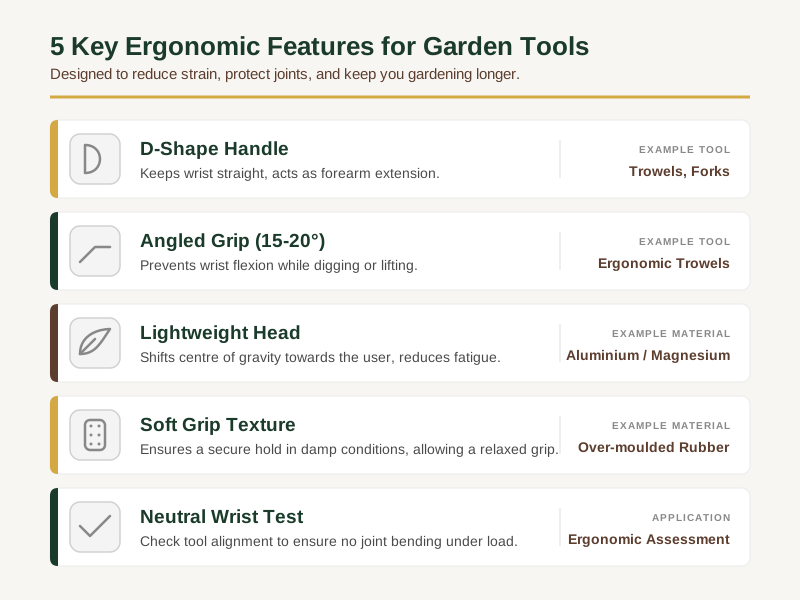
- The D-Shape: The handle curves back towards the palm, turning the tool into an extension of your forearm. This means the wrist stays straight rather than bending inward or outward, which is the single most effective feature for preventing that painful snap.
- Angled Handles: A forward-tilt of about 15-20° lets you dig without flexing the wrist forward. Think of the handle as a low-angle shovel—the wrist remains in line with the forearm.
- Weight Distribution: A heavy steel head on a long shaft forces the hand to support the whole mass, quickly tiring the forearm muscles. Lightweight aluminium or magnesium heads shift the centre of gravity closer to the grip, letting gravity do most of the work.
- Grip Texture: Soft, non-slip rubber or silicone over-moulds give you control even when your hands are damp from a British drizzle. You can hold the tool with a relaxed grip instead of squeezing like you’re trying to crack a walnut.
Imagine the handle as a continuation of your forearm; the wrist becomes a passive hinge rather than a load-bearing joint. That simple alignment makes the difference between a few minutes of digging and a full-blown wrist ache. Here’s how the individual features stack up at a glance:
| Feature | Benefit | Example Tool Type |
|---|---|---|
| D-Shape Handle | Keeps wrist straight, acts as forearm extension | Trowels, Forks |
| Angled Handle (15-20°) | Prevents wrist flexion while digging | Trowels |
| Lightweight Head | Shifts centre of gravity, reduces fatigue | Aluminium/Magnesium heads |
| Soft Grip Texture | Secure hold in damp conditions, relaxed grip | Over-moulded rubber/silicone |
| Inverted V-Tip | Bites into compacted soil with less force | Root-heavy soil trowels |
| Weighted Insert | Uses gravity to pull tool into soil | Specialist aids |
| Wrist Support Cuff | Locks wrist in neutral position | Medical aids |
| Single-Handed Offset | Leverages forearm rather than wrist | Niche digging tools |
Best Ergonomic Trowels
Peta Easi-Grip trowel (paid link) – the premium pick for sitting down or weak grips
The angled, low-profile handle on the Peta Easi-Grip feels almost like a spoon you can push into soil without bending your wrist, and the soft-touch coating stays grippy even on a cold, wet morning. The design justifies the roughly £45-£55 price tag—the handle geometry and soft-touch coating do what they say on the tin. The only downside is the plastic reinforcement around the blade, which some buyers report feels a touch flimsy after sustained heavy use, but for most weekend gardeners the trade-off is worth it.
Radius Garden trowel (paid link) – the go-to for root-heavy soil
Radius’s Root Slayer line has an inverted V-tip and a serrated edge, built for exactly the kind of rock-filled, root-tangled border that would otherwise mean prying with a plain blade. The D-shaped handle keeps the wrist neutral, and despite the powder-coated carbon steel head it still comes in under 300 g. Expect to pay somewhere around £25-£35 for the trowel-sized version. The only weak point is the slightly longer handle, which can feel a bit unwieldy in tight pots.
Budget D-Handle Option – Spear & Jackson Traditional Trowel
If the premium models feel like a stretch, Spear & Jackson’s traditional wooden-handled trowel offers a solid steel blade with a simple D-shaped hardwood handle for around £12-£15, one of the cheapest genuinely ergonomic options going. It’s on the heavier side for a hand trowel, but the handle still forces the wrist into a straight line, which is the key ergonomic benefit. It won’t have the rubberised grip of the Peta, so you may need a separate grip sleeve in wet weather, but it does the job without a big outlay.
For a deeper dive into back-friendly garden setups and adapting your wider tool kit, have a look through our main blog index.
Best Ergonomic Hand Forks
A hand fork needs balance more than raw sharpness. A heavy head forces the wrist to compensate, turning a light weeding job into a mini-gym session.
- Fiskars Ergonomic Hand Fork – The teardrop-shaped shaft sits at roughly the same 17° angle as Fiskars’ full-size ergonomic forks, so the wrist stays neutral even on a quick weeding job. Hardened steel tines cope with compacted soil without bending, and the SoftGrip coating stays secure in the rain. Expect somewhere in the £12-£20 bracket depending on retailer. The only gripe worth flagging is that the soft-grip coating can perish after a few years left outdoors.
- Spear & Jackson Traditional Stainless Steel Hand Fork – A classic design with a D-shaped, ribbed wooden handle. The balance point sits right at the grip, meaning the wrist stays neutral. At around 260 g it’s light for how sturdy it feels, and the stainless tines tackle compacted soil without bending. Price is typically similar to the equivalent trowel, usually under £20. The trade-off is the lack of a rubberised grip, so a separate sleeve may be needed in damp conditions.
A standard fork feels like a hammer—the head is forward of the hand, forcing the wrist into extension. An ergonomic fork feels like an extension of your arm, letting you work without the wrist screaming for mercy.
Adapted Tools for Severe Strain
When wrist pain is more than a mild ache, specialist aids can bridge the gap. The gardening for health charity Thrive frequently highlights how adapting your equipment is the best way to stay active in the garden, though you should always consult a GP or Occupational Therapist to ensure these specific aids suit your condition.
- Wrist Support Cuffs – These neoprene wraps lock the wrist in a neutral position while you work, reducing the load on the joint. They’re cheap—roughly £10-£15—but a medical professional should confirm they’re suitable for you before use.
- Weighted Trowels – Some manufacturers add a small lead insert near the blade, letting gravity pull the tool into the soil with minimal effort. The extra weight is modest (around 150 g) and makes a real difference if your grip gives out after a few minutes. Expect a price around £30-£40.
- One-Handed Digging Tools – Long-reach, offset-handle trowels (Peta’s Long Reach range is one example) let you lever the tool from the forearm rather than the wrist, useful if grip strength alone won’t hold a standard trowel steady. These sit in a similar price band to the premium trowels above; a health professional’s sign-off is advisable before committing.
How to Test a Tool for Ergonomics Before Buying
You don’t need to be an expert to spot a poorly designed tool. Before you hand over any money at the garden centre, put the trowel or fork through these three practical checks.
1. The “Neutral Wrist” Test
Hold the tool by the handle and look down at your wrist. If your wrist forms a straight line with your forearm, you’ve got a neutral position. Anything that forces the wrist to bend inward or outward is a red flag.
2. The Weight Test
Lift the tool by the handle and hold it straight out for ten seconds. If your forearm muscles fatigue within that time, the tool is too heavy for prolonged use. Light tools should feel like they’re barely there.
3. The Grip Test
Grip the handle with a relaxed hand, as if you were holding a coffee mug. If the tool slips or you feel you have to squeeze hard to keep it steady, the grip texture isn’t right for arthritic or weak hands.
Do Not Buy checklist:
- Thin plastic handles that feel like they’ll snap under pressure.
- Over-long shafts that push the centre of gravity far from the hand.
- Heavy steel heads on short handles—they force the wrist to lift the whole mass.
Frequently Asked Questions
Are ergonomic tools really worth the extra money?
Yes, if your grip tires quickly or your wrist aches, the extra £15-£30 for a well-designed handle or a soft-grip coating pays for itself. If the tool lets you garden for an hour instead of thirty minutes without pain, the cost is spot on.
Can I use an ergonomic trowel if I also have a bad back?
Absolutely. While the primary benefit is wrist alignment, a lighter head and balanced handle also mean you don’t have to bend over quite as awkwardly to compensate for a heavy tool. For severe back issues, pair these tools with waist-high raised beds.
What’s the difference between a D-handle and a T-handle?
A D-handle keeps the wrist in a straight line, acting like an extension of your forearm. A T-handle forces the wrist to bend outward to get a grip, which can significantly increase the strain on both your wrist and forearm during heavy digging.
What to Do Next
As I’ve mentioned on my about page, adapting how you garden is just part of staying at it for the long haul. A change in handle shape, weight, and grip texture can turn a painful digging session into something you barely notice — the right ergonomic trowel or hand fork aligns your wrist, balances the tool, and lets you work longer without the snap.
Go for the Peta if you’re gardening from a seated position or your grip is weak, the Radius if roots and rubble are the real obstacle, and the Spear & Jackson if budget matters more than a soft-touch coating. Whichever you pick, download the free Easier Gardening Tool Checklist and jot down the models that tick your particular boxes. Still unsure whether a wrist cuff or weighted tool suits a pre-existing condition? That’s a five-minute conversation with your GP or an occupational therapist, worth having before you spend on anything specialist.
Drop me a line through the contact page if you want a second opinion on a specific tool.
Related Guides
For a complete overview, see our Gardening with Arthritis: UK Tools and Tips That Actually Help.
This piece draws on joint-care guidance from Arthritis UK, Thrive’s work on gardening and wellbeing, and general NHS advice on managing joint pain, alongside the mechanical reasoning set out above. (As an Amazon Associate I earn from qualifying purchases — every product recommended above is one I’d genuinely reach for in my own garden.)
Check Radius Garden trowel price → (paid link)
See Peta Easi-Grip trowel on Amazon → (paid link)