Watering Without the Wrist Strain: Easy-Carry Cans & Hoses
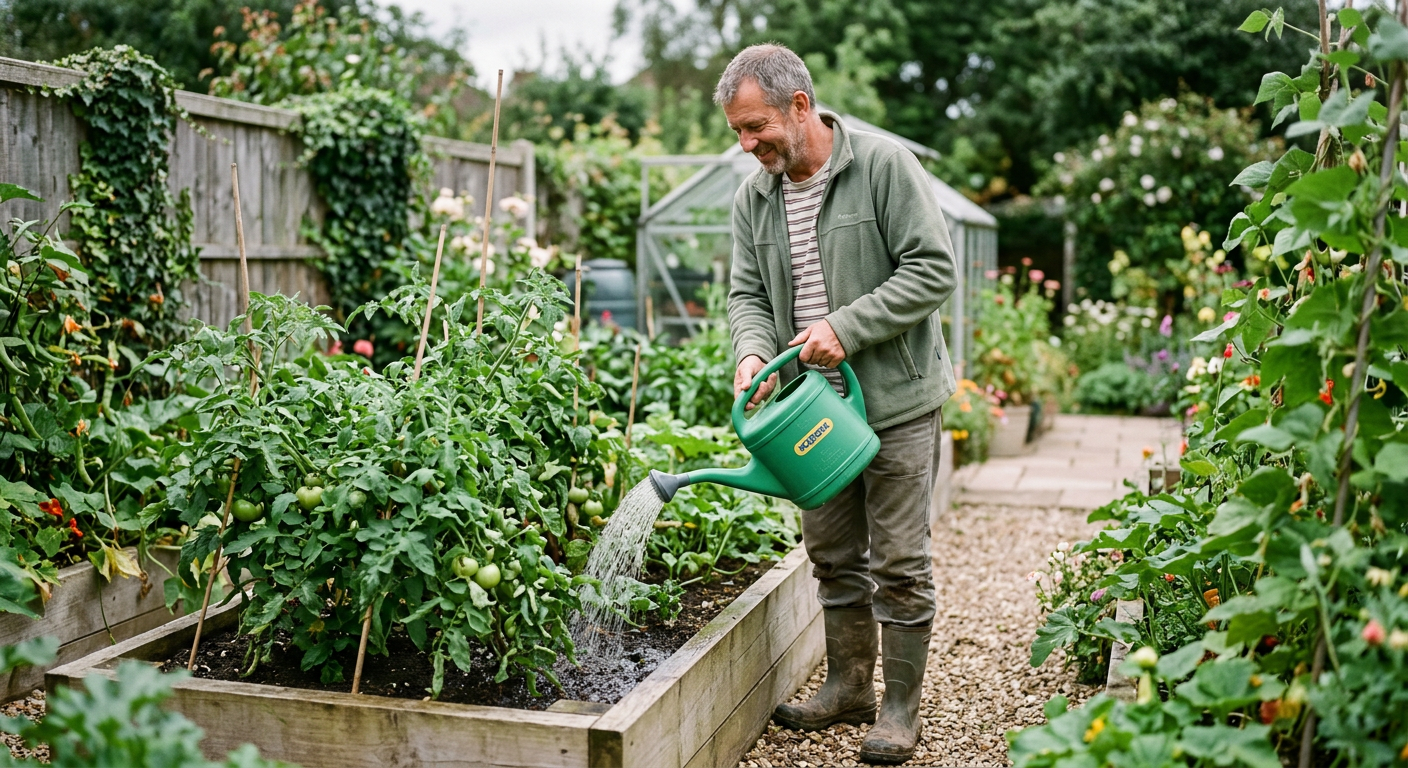
A standard 5-litre metal watering can weighs over 5kg when full, forcing your wrist to bear that heavy load while twisting to tip the spout. Once your grip starts complaining, keeping the garden hydrated turns from a pleasure into an endurance test. Swapping to a balanced, lightweight can or an easy-grip hose nozzle solves most of this: the tool takes the mechanical strain instead of your wrist, keeping the joint in a neutral position so you can just get on with the job.
Why Does Traditional Watering Strain Your Wrists?
Standard watering cans force your wrist into a pronated position—twisting the palm downwards as you tip the spout—while bearing the full weight of the water. A typical metal can holds 5 litres, meaning your wrist must manage over 5kg of shifting weight plus the torque of the tilt. The result is a sharp ache after just a few pours.
Hose nozzles add a different mechanical problem. The smooth plastic trigger needs a firm, continuous squeeze to stay open, and the straight-through design makes you twist the wrist to change spray patterns. The tighter you grip, the more the joint is compressed, which is unforgiving on an arthritic hand.
The fix is straightforward: reduce the weight, improve the leverage, and keep the wrist at a neutral angle. Angled spouts let the water flow while the handle stays roughly in line with your forearm. On the hose side, rotating or easy-grip triggers let you switch spray modes with a gentle flick rather than a forceful twist. This lines up with general advice from the gardening charity Thrive, which points gardeners toward adapted tools that do the mechanical work rather than the wrist. A lighter can and a well-designed nozzle won’t cure a bad wrist on their own, but they do stop it from doing the heavy lifting.
The Best Lightweight Watering Cans for Weak Wrists
The single most useful switch you can make is from metal to plastic, and from a large capacity to a smaller one. A 9-litre galvanised steel can weighs around 2.5kg empty and over 11kg full — that is a lot of shifting weight for a wrist that is already complaining. The picks below all use recyclable plastic bodies and smaller volumes, which keeps the load manageable without sacrificing usefulness.
Haws Selly Soak (4.5 Litre, Plastic)
Haws has been making watering cans in the West Midlands since 1886, and the Selly Soak is their lightweight outdoor plastic model. At 4.5 litres (one gallon) it holds about half what a big steel can does, and the plastic body keeps the empty weight down noticeably. Haws describe their outdoor range as “beautifully balanced” and “easy to carry and tip,” which is the bit that matters here — a balanced can lets you pour with your wrist in a neutral position rather than fighting a forward-pulling load. It sits around £26, which makes it one of the more affordable ways into a properly designed can.
Weak point: 4.5 litres still means refills on a larger border. If you have a lot of pots, pair it with the indoor pick below so you’re not trekking back to the tap every two minutes.
Haws Cradley Cascader (7 Litre, Plastic)
If 4.5 litres feels too small for your plot, the Cradley Cascader steps up to 7 litres while staying in the same recyclable plastic family. The larger capacity means fewer refills, though the trade-off is more weight per trip (around 9kg full). The taller body and longer spout give you better reach across a raised bed without over-extending the arm. Around £36.
Weak point: At 7 litres, this is the upper limit of what most sore wrists will want to carry in one hand. Use the two-handed lift (top handle plus side handle) when it’s full, or fill it only partway.
Haws Plastic Heritage Indoor (1 Litre)
For indoor plants, seedlings, and anything on a windowsill, a 1-litre plastic can is genuinely all you need. Haws’s Heritage Indoor is a no-frills plastic model at around £11 — light enough that even a badly flared wrist can manage it without thinking. The long, thin spout is the key feature: it lets you direct water straight at the compost rather than sloshing it over the leaves, which matters for plants that hate wet foliage.
Weak point: It’s strictly an indoor or greenhouse tool. The capacity and spout design don’t suit outdoor beds.
Budget Alternative: A Basic 1-Litre Plastic Can
If the budget is tight, a simple 1-litre plastic can from B&Q, Wilko, or The Range (typically £5–£10) will do the indoor job nearly as well as the branded models. What you lose is the handle shaping and the spout precision — the grip tends to be a straight plastic rim that can become slippery, and the spout is shorter, so you’ll do more tipping from the wrist.
For context, the heritage steel Haws cans (the Warley Fall at £115+) are beautiful objects and beautifully balanced, but they are heavy before you add water. They suit a gardener whose grip is fine and who values the craftsmanship — not someone whose wrist is the limiting factor.
| Feature | Haws Selly Soak | Haws Cradley Cascader | Haws Heritage Indoor |
|---|---|---|---|
| Capacity | 4.5 Litres | 7 Litres | 1 Litre |
| Material | Recyclable plastic | Recyclable plastic | Plastic |
| Best For | Outdoor beds and borders | Larger plots, fewer refills | Indoor plants, seedlings |
| Price Range | Around £26 | Around £36 | Around £11 |
The Best Hose Attachments for Weak Wrists
The mechanical problem with most hose nozzles is the sustained squeeze. You grip, the trigger fights back, your forearm tires, and the wrist ends up doing the holding. The fix is a nozzle with a locking trigger — you squeeze once to start the flow, click the lock, and let go. Your hand plays no part in keeping the water running.
Hozelock Multi Spray Plus (Model 2684)
This is the nozzle that comes up again and again for gardeners with grip issues, and the reason is the two-stage locking trigger. You can lock it at full flow (100%) for a sustained soak, or at a reduced flow (around 40%) for lighter work — either way, your hand comes off the trigger entirely. The soft-touch ergonomic handle is shaped to sit in a relaxed grip rather than a clenched one, and the head twists between six or seven spray patterns (jet, cone, mist, shower and so on) without you having to wrench your wrist to change modes. UK retail sits around £15–£23 depending on the retailer.
Weak point: The plastic body is tougher than it looks but can crack if dropped onto paving in winter. For a longer-lasting build, the Multi Spray Pro (stainless steel connection, around £30) is the upgrade.
Soaker Hoses – The No-Hand Option
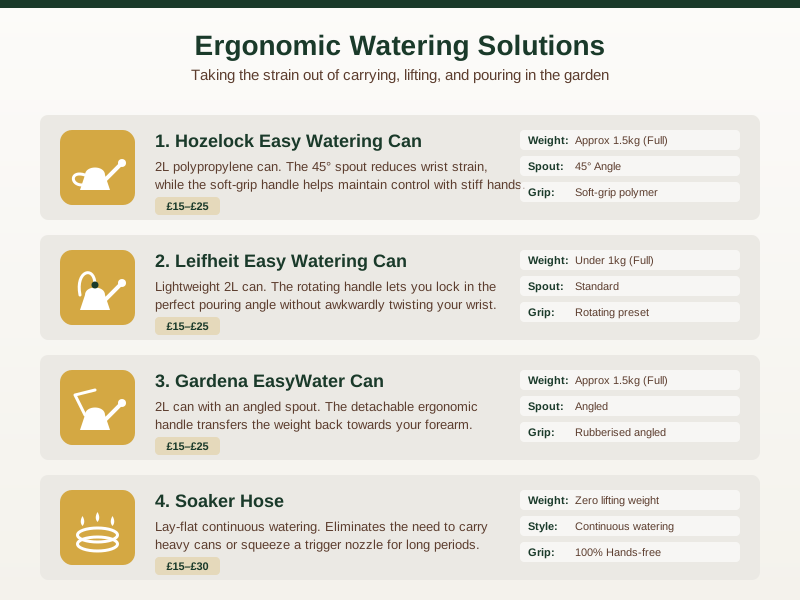
If you’re fed up with any nozzle at all, lay a soaker hose along your beds and let gravity and the mains do the work. The charity Arthritis UK generally recommends reducing carrying and gripping tasks where possible, and a soaker hose is about as complete a way to do it as exists. A 20-metre roll of 13mm soaker hose from Hozelock or a similar brand costs around £25–£30 and connects to a tap with a simple quick-fit adaptor. Water seeps slowly into the soil along the whole length, eliminating the need to carry a can or grip a nozzle.
Pro tip: Fit a simple tap adaptor with a ball valve — you get full control of the flow without ever having to hold a hose or squeeze a trigger.
Building a Low-Strain Watering Routine
Quick Wins You Can Start Today
A few strategic changes to how you move water around the garden can save your joints a lot of unnecessary work.
- Place your watering station close to the plants. Move pots onto a low, sturdy trolley near the tap, or set up a small water trough a few metres from the garden beds. Reducing the carrying distance cuts the physical effort significantly.
- Use a rain barrel for bulk water. A 200-litre water butt perched on a short plinth lets you fill a 2-litre can from a tap at waist height, sparing you the climb up a ladder or a deep bend to the ground.
- Water early, water often. Early-morning watering means cooler soil and less evaporation, so you’ll need fewer refills. Filling the indoor can while the kettle boils is a simple way to get two tasks done at once.
- The “Two-Can” trick. Keep one can dedicated to indoor plants and another for the garden. When the garden can empties, you simply swap the lighter indoor can without a full refill. It sounds simple, but it saves a lot of wrist-twisting trips to the tap.
Setting Up a Dedicated Watering Station
If carrying water is becoming too much of a faff, setting up a dedicated, low-strain watering station cuts out the walking and the heavy lifting entirely.
Step 1: Raise your water source. Position a slimline water butt on a sturdy brick plinth so the tap sits at exactly waist height. This completely removes the need to bend down when filling your watering can, keeping your back straight and your wrist neutral.
Step 2: Install a quick-connect splitter. Fit a brass two-way splitter to your main garden tap. This lets you keep a soaker hose permanently attached to one side, while leaving the other free for a lightweight hose or filling a can, saving you from wrestling with tight screw threads every time you switch tasks.
Step 3: Lay out a soaker network. Run a 13mm soaker hose through your most demanding borders or raised beds. Pin it down under a light layer of mulch so it stays put. This does the heavy lifting for your thirstiest plants without you ever having to hold a nozzle.
Step 4: Keep a lightweight can at the station. Store your 2-litre angled watering can right next to the water butt or tap. Keeping it at the point of use stops you from carrying an empty can back and forth across the garden before you’ve even started the actual work.
Frequently Asked Questions
Which material makes the lightest watering can?
Polypropylene plastic is the lightest option widely available in the UK. Steel or galvanised metal cans are heavier before you’ve even added a drop of water, which puts unnecessary strain on a weak wrist.
Can a hose nozzle really reduce wrist strain?
Yes, but only the right kind. The feature that matters most is a locking trigger — you squeeze once, click the lock, and your hand comes off the trigger entirely, so there’s no sustained grip to tire the joint. A twisting head (to change spray pattern) is a secondary help, since it lets you switch modes with a small wrist turn rather than a hard squeeze. The Hozelock Multi Spray Plus has both, which is why it gets recommended for sore hands.
Are soaker hoses worth the investment for a small garden?
For borders under 30 metres total length, a 20-metre roll of soaker hose is spot on. It spreads water evenly and completely removes the need to carry heavy cans or hold a nozzle, making it a brilliant, low-effort solution for both your joints and your water bill.
Related Guides
For a complete overview, see our Tools for Gardening with Limited Mobility: Low-Effort UK Guide.
Before You Go
Lightweight, angled cans and ergonomic hose attachments take the strain out of everyday watering, letting you focus on the plants rather than the pain in your wrist. Pair those tools with a sensible layout—a nearby water point, a rain barrel, or a simple two-can system—and you’ll find garden chores becoming effortless again.
If you’d like to discuss which tools might suit your own setup, feel free to get in touch and ask for our Free Easier Gardening Tool Checklist. It walks you through the key features to look for and helps you match them to your garden’s size and your wrist’s comfort level.
Keep watering, keep growing, and remember: the garden’s still yours to enjoy, just with a bit more cleverness built into the kit. You can read more about the thinking behind this site on the About page.
This guide draws on general ergonomic guidance from Thrive and Arthritis UK, alongside publicly available product information — treat it as a starting point, and always check current specs and prices with the retailer or manufacturer before buying.