Gardening with Arthritis: UK Tools and Tips That Actually Help
As an Amazon Associate I earn from qualifying purchases. This page contains affiliate links — if you buy through them, I earn a small commission at no extra cost to you.
Arthritis doesn’t have to mean giving up the garden — it means changing three things: how you grip a tool, how you move your body, and which kit you actually buy. Get those three right and most of the flare-triggering moments — the aching thumb after an hour of deadheading, the seized-up knee after weeding a border — become avoidable rather than inevitable.
For the medical side of things — flare management, medication, knowing when pain means “stop” rather than “push through” — that’s a conversation for your GP or the practical guidance at Arthritis UK. Everything below deals with the tools and the garden itself: what genuinely reduces strain, and what’s just marketing.
Grip and Movement: The Small Changes That Save Your Joints
How you grip a tool can add or subtract a huge amount of stress from your hands, wrists and back, and it costs nothing to fix. Three adjustments make the most noticeable difference when your hands start playing up.
📺 Watch: Physiotherapist Will Harlow’s “Secrets to Injury-Free Gardening” talk, recorded live at Froyle Gardening Club
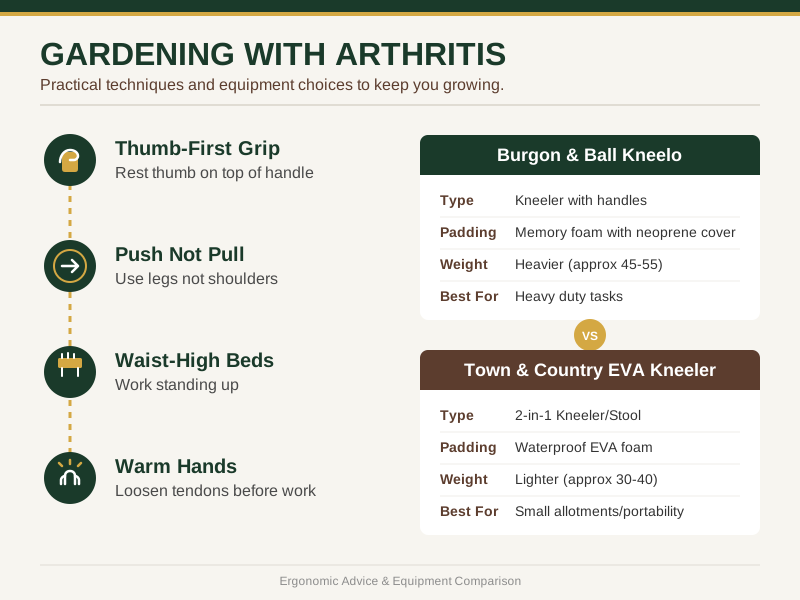
1. The “thumb-first” grip – Instead of wrapping your hand around the handle as if you’re tightening a bolt, rest your thumb on top and let your fingers curl loosely underneath. This keeps the wrist neutral and straight. Think handshake, not hammer-grip: a straight wrist takes noticeably less torque than a bent one, which is why the ache tends to ease almost immediately.
2. Push, don’t pull – With a trowel or spade, push the soil away rather than dragging it towards you. Pushing uses the bigger, stronger muscles in your legs and back; pulling dumps the load onto your shoulders and lower spine instead. It feels slightly unnatural at first, but the drop in lower-back strain is worth the adjustment.
3. Let a long-handled tool do the twisting – A long-handled weed puller (the Fiskars Xact is a solid example) lets you stand upright and pull with one hand while the other rests on the handle for balance. The angled head does the twisting for you, so your wrist never has to.
You’ll need to experiment a little to find what feels right for your own hands, but once the movement becomes habit, the garden stops feeling like a chore.
What Are the Best Secateurs for Arthritic Hands?
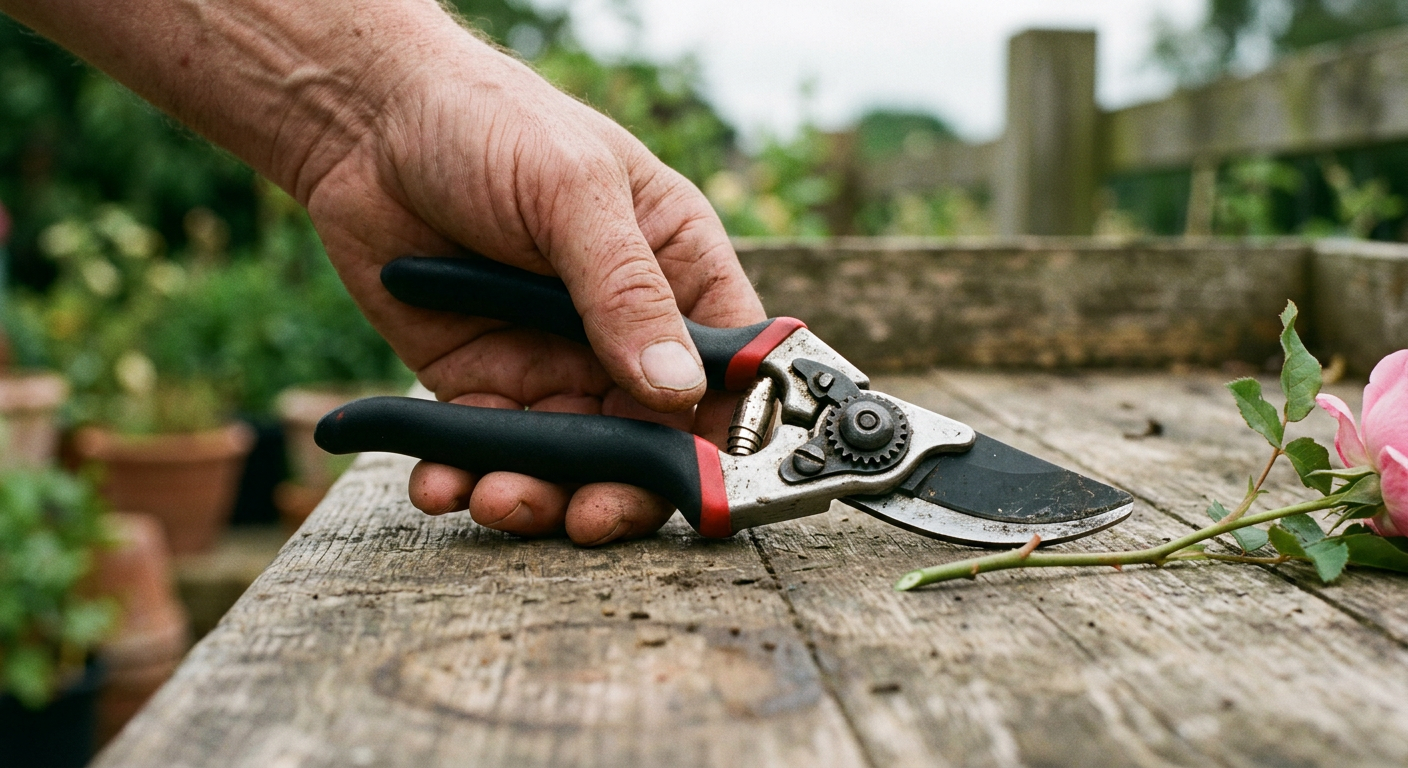
The best secateurs for arthritic hands use either a rolling handle or a geared ratchet mechanism to take the strain out of cutting. A rolling handle keeps your wrist straight and neutral as you squeeze, rather than relying on raw grip strength. A ratchet mechanism works differently: it splits one hard, painful cut into three or four light clicks. Both stop your hands tiring out on woody stems, so you can prune for longer without paying for it the next day.
Here’s how three widely-available models compare, each with a clear strength and a clear compromise:
Fiskars PowerGear – The rolling handle gives roughly three times the cutting power for the same squeeze, turning a light hand-press into a clean snip. That makes it well suited to light-to-medium pruning around roses or fruit trees. It’s affordable — usually somewhere in the £25–£45 bracket — and the ergonomic grip stays comfortable even on a cold morning. The trade-off is no wire-cutter edge, so you’ll need a separate tool for tough ties.
Felco 7 (paid link) – Swiss-engineered and widely regarded as the benchmark for heavy-duty pruning. The rotating handle keeps the blade aligned with the stem while your wrist stays straight, and the steel construction feels genuinely solid. UK retailers typically price it around £60–£90 depending on where you buy it — not cheap, but the durability means it tends to outlast several budget models. The larger size can feel bulky for smaller hands, so it’s best kept for sturdier branches.
View Felco 7 on Amazon → (paid link)
Spear & Jackson Ratchet – The geared ratchet divides a tough cut into several light squeezes instead of one hard one. Prices vary a lot by model, typically £15–£30, and it copes well with tougher, woody stems. Quality control is the known weak spot — some owners report the ratchet slipping after a few months, so it’s worth checking the click feel before you commit to a full pruning session on it.
The appeal of a ratchet mechanism shows up most on the stems that would otherwise beat you: a stubborn blackthorn branch that takes a full minute of brute force with an ordinary pair often gives way to a couple of gentle ratchet clicks instead — the difference is obvious the first time your hands are already tired.
Common Mistakes That Make Joint Pain Worse
A few habits show up again and again in people who struggle more than they need to, and none of them are about the tools themselves.
Gripping harder than the job needs. Arthritic hands tend to overcompensate for weakness by clamping down, which only adds more load to an already-stressed joint. If a tool needs a white-knuckle grip to work, the mechanism is wrong for you, not your hands.
Gardening through the pain to “get it finished.” Short, frequent sessions beat one long marathon every time. Stopping before the ache sets in is not giving up — it’s the single cheapest joint-protection tool available, and it costs nothing.
Buying premium before checking the mechanism. An expensive pair of secateurs with the wrong handle geometry for your hand will hurt just as much as a cheap one. Test the grip and squeeze action before the price tag decides for you.
Ignoring cold, stiff mornings. Working straight into a cold snap without warming up the hands first is one of the fastest routes to a flare-up. It takes thirty seconds to avoid.
Kneeling and Seating: Stop Bending Over
Your knees and lower back take the brunt of garden work, especially with repeated bending over low beds. A good kneeler or stool takes a significant amount of that load off both joints.
Burgon & Ball Kneelo (paid link) – A thick memory-foam pad under a neoprene cover that stays comfortable even after hours on wet soil. The side handles are the real feature here: they give you a stable lever to push up from without straining your knees. Expect to pay roughly £18–£25, and once it’s in place it earns its keep quickly.
See Burgon & Ball Kneelo on Amazon → (paid link)
Town & Country EVA Kneeler – A 2-in-1 design that flips between kneeler and low stool, useful for tasks that need brief sitting, like sowing seedlings. The EVA foam is waterproof, so it can live outside without worrying about mould. The trade-off is the stitching — some owners find the seams prone to fraying after a season of heavy use. It’s the more budget-friendly option, typically £17–£22, and the most portable for a small allotment.
Skip the side handles on the Kneelo and getting up tends to end in an undignified wobble — a reminder that they’re not a luxury add-on, they’re the part doing the actual mechanical work.
Kneeler Comparison: Which Suits Your Garden
| Feature | Burgon & Ball Kneelo | Town & Country EVA Kneeler |
|---|---|---|
| Type | Kneeler with handles | 2-in-1 kneeler/stool |
| Padding | Memory foam with neoprene cover | Waterproof EVA foam |
| Typical price | £18–£25 | £17–£22 |
| Best for | Heavy, repeated use with push-up support | Small plots, portability, occasional sitting |
Raised Beds and Garden Design: Work at Waist Height
If you have to bend, do it at waist height rather than the waist-to-ground angle that punishes the back. Raised beds give you that advantage, plus a few other perks worth knowing about. (More on setting up raised plots over on the blog if you want to go deeper.)
📺 Watch: Adur & Worthing Councils’ accessibility guide to Highdown Gardens
A waist-high bed (roughly 60–80cm tall) lets you tend rows standing upright, cutting the load on the lumbar spine dramatically. The raised soil also drains better, meaning fewer waterlogged roots and less heavy muck to lift.
VegTrug – Well suited to small courtyards or patio corners, with modular trays sitting around 80cm off the ground at the top edge. Starter sets are not cheap — budget somewhere in the £100–£160 range — and it’s worth remembering that a full watering can is heavy to lift to that height, so a hose with a long lance is usually the better bet in practice.
A simple bench or sturdy stool nearby for occasional rests is worth adding too. A short break every twenty minutes or so stops joints locking up, and the seat itself doesn’t need to be expensive — a reclaimed pallet with a cushion does the job.
Managing Stiff Joints in Winter
Cold, damp British winters can make joints feel far tighter than usual. The gardening charity Thrive rightly champions getting outside year-round, but a few adjustments keep you moving without the cold locking your hands up.
Warming your hands in a bowl of warm water for a minute before starting loosens the tendons enough to improve your initial grip.
Bionic ReliefGrip gloves – Designed with input from an orthopaedic hand surgeon, these use a premium leather construction with silicone grip panels at the fingertips and extra padding across the palm to cut vibration. They’re widely available in the UK for around £25–£30. The trade-off is reduced fingertip sensitivity for very fine work, so they suit firm-grip jobs better than delicate seed-sowing.
In the cold, aim for shorter sessions — ten to fifteen minutes at a time — and keep moving between them. A short walk around the garden after each batch keeps blood flowing and stops the next session feeling harder than it needs to.
The Verdict: Where to Spend and Where to Save
Weighed against each other, these interventions are not equally important. Grip and body mechanics come first, full stop — they’re free, they work immediately, and skipping them undermines everything else on this list. After that, secateurs are the next-highest stake, because hand fatigue from cutting is usually what ends a session early; a decent rolling-handle or ratchet pair at the lower end of the price range does the job without needing to spend Felco money. Kneelers, raised beds and gloves matter, but they’re comfort multipliers rather than the primary fix — worth having, but not where a limited budget should go first if you’re starting from nothing. If you only change one thing this season, change how you grip and move before you buy anything at all.
Frequently Asked Questions
Can I still garden if I have a bad back?
Yes. The key is changing how you work rather than pushing through the pain. Use long-handled tools to avoid stooping, raise beds to around 60–80cm so you can work standing up, and take regular short breaks. A stool or a kneeler with sturdy side handles also keeps the mechanical strain off your lumbar spine. The NHS treatment guidance for osteoarthritis covers the exercise side of this in more depth.
Are ratchet secateurs worth the money?
Yes, if your hands tire quickly or struggle with thicker branches. The ratchet mechanism spreads the cutting force over several light squeezes rather than one painful grip. Just avoid the very cheapest models, where the ratchet itself can feel flimsy — a decent pair should click solidly and consistently.
What is the best tool for weeding with a bad back?
A long-handled weed puller is generally the best option, letting you stay upright while the tool does the leverage work. The angled head grips the weed at the root, so there’s no need to bend to pull it out.
Do I need to buy expensive tools?
Not necessarily. The mechanism matters far more than the brand name. A mid-range rolling-handle or ratchet pair covers everyday pruning perfectly well; a premium pair only earns its price if you regularly tackle thick, heavy-duty stems.
Putting It Into Practice
A few simple physical adjustments — a better grip, a waist-high bed, a supportive kneeler — can turn a painful gardening session into a comfortable one. The tools help, but the way you move is what actually protects your joints, and it’s worth repeating that this is general guidance rather than medical advice: if something specific is bothering you, a GP or physiotherapist is the right next step, not a blog post.
If you’re ready to put this into practice, the free checklist below walks through each piece of kit, the price range to expect, and the mechanical features worth checking before you buy.
Grab the Free Easier Gardening Tool Checklist and start planning a garden that works with your body, not against it. Happy, pain-free gardening — you’ve earned it.
Explore More Topics
Go deeper on specific topics:
- What Are Good Hand Pruners for Arthritic Hands?
- Anvil vs Bypass Secateurs: Which is Best for Weak Hands?
- Best Lightweight Cordless Hedge Trimmers for Weak Grips UK
- Best Ergonomic Trowels and Hand Forks to Prevent Wrist Strain