How to Garden with a Bad Back (Without Bending)
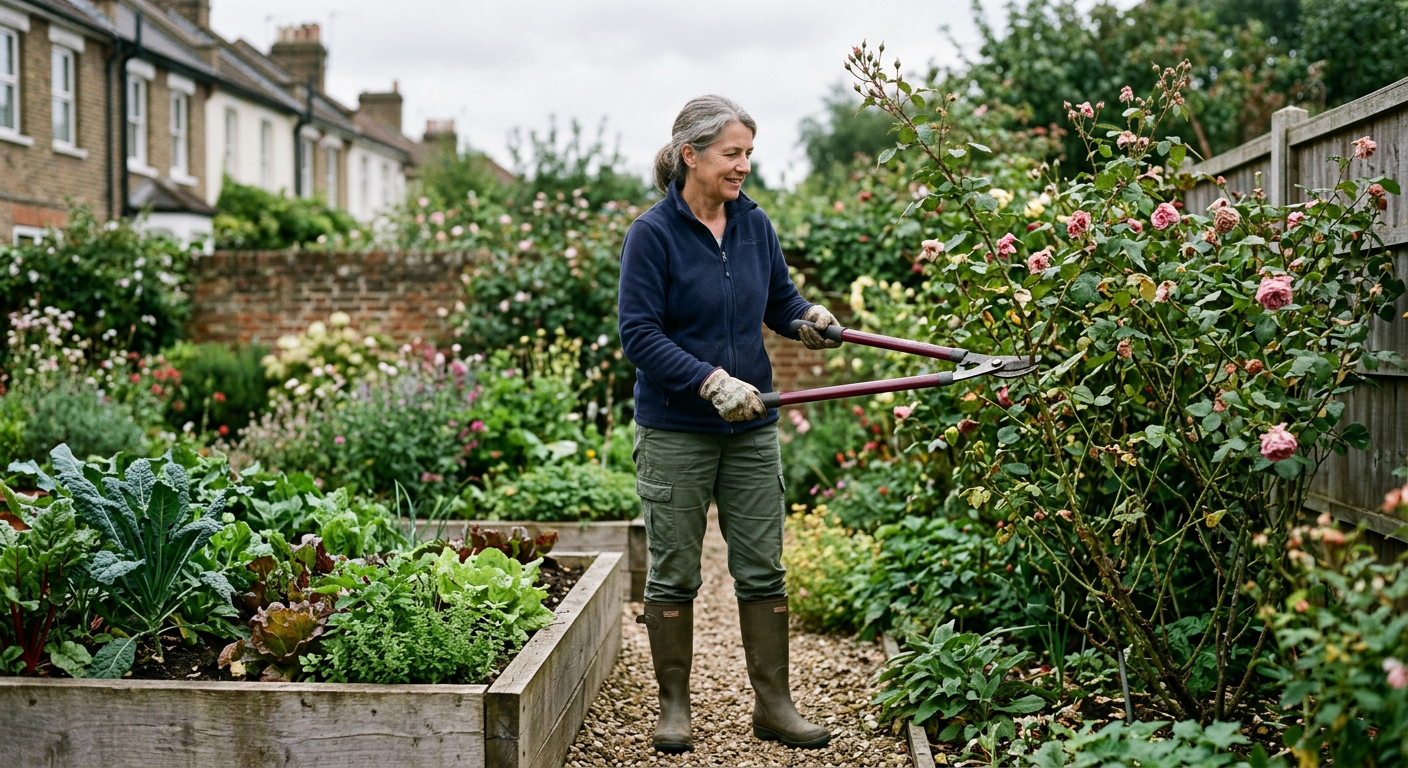
Every gardening tool is really just a lever, and every stooped-over weeding session is really just bad leverage. The moment you’re bent double over a border, your spine is doing the job a long handle or a raised bed should be doing instead – acting as the fulcrum for far more force than it was ever built to take. Fix the leverage and the back pain mostly fixes itself: swap short-handled tools for long ones, lift borders and beds to waist height, and let the mechanism do the work your spine used to.
Why Does Bending Over Hurt Your Back in the Garden?
When you bend over a garden bed, your spine acts as a fulcrum, multiplying the weight of whatever you are lifting or cutting. A short trowel held low creates roughly double the torque on your lower back compared to a long-handled tool used at waist height. The result is a compression spike in the lumbar discs, which is the main trigger for flare‑ups in a bad back.
The aim is to keep the spine neutral – straight, not curved. Long handles, raised work surfaces and low‑effort gripping mechanisms all act as levers that shift the load away from your back. That’s the engineering behind every tool worth recommending here. If you are dealing with a specific condition or recovering from surgery, it is always worth checking in with your GP or an occupational therapist, but from a purely mechanical standpoint, upright gardening changes everything.
Long‑Reach Toolkit – Cutting the Need to Stoop
A long‑handled lopper is the cornerstone of upright pruning. A telescopic steel‑capped lopper, such as Burgon & Ball’s RHS-endorsed range (roughly £45-£58), extends to around a metre and lets you snip a two-inch branch at waist height rather than crouched at ground level. Cheaper, thinner-shafted loppers tend to flex under load and let the cut slip, so a sturdier, slightly heavier build is worth the extra weight for a clean cut.
Grabbers are another unsung hero. A telescopic grabber with a 1.5‑m reach lets you pull weeds or pick up broken pots without bending. The mechanism uses a spring‑loaded jaw that opens with a light squeeze, meaning you can lift a 3‑kg pot with just a gentle grip.
Extension poles for deadheading or light pruning work the same way. A fixed‑length 2‑m pole is cheap and rigid – great for precise cuts. If you need more versatility, a telescopic pole expands your reach but loses a touch of precision at full extension. The honest answer is: choose a fixed pole for regular tasks, and keep a telescopic one for occasional high‑reach jobs. Charities like Thrive, who specialise in gardening for health, often highlight long-handled tools as the simplest way to keep gardening when your mobility changes.
Elevated Gardening Solutions – Bring the Garden to Your Height
Raising the work surface eliminates the need to bend entirely. A waist‑high raised bed, built from timber planks (roughly £100‑£150 for a standard unit), positions the soil at 70‑80 cm. That is the sweet spot where you can work standing up with your arms at a comfortable angle, taking the load off the lumbar spine compared to ground‑level planting. Shallow slatted planters drain well, but their limited depth (often around 30 cm) isn’t enough for root‑heavy crops without adding a second tier. The trade‑off is that a traditional timber bed offers superior stability and depth, albeit at a higher price for a robust kit.
Garden stools are the secret weapon for lower borders. A swivel stool with a padded seat and side handles lets you sit, lean forward slightly, and stand without the awkward twist that strains the lower back. Cheap plastic stools are prone to cracking within weeks of regular use – the honest budget pick is a sturdy metal‑frame stool, even if it costs a few pounds more.
For those who want both seating and height, a garden kneeler that flips over to become a seat with side handles is a brilliant belt‑and‑brace solution.
Weight Management & Carrying – Lighten the Load
A heavy mower or hedge trimmer can turn a simple sweep into a full‑body workout. The Bosch AHS 50‑20 LI cordless hedge trimmer weighs just 2.5 kg, noticeably lighter than trimmers with a bigger blade or a corded motor hanging off the end. That lighter head means you can trim at shoulder height or along a tall hedge without your wrist and forearm giving out halfway through. Budget-tier alternatives in this category tend to run louder and offer shorter battery life, but they’re still a solid entry‑level option if budget is tight.
Rolling garden carts are another low‑effort hero. A sturdy two‑wheel trolley (around £50) lets you transport bags of soil or compost without bending. The key is a large, rubberised wheel that rolls over typical garden paths without wobbling. Cheap plastic carts with a narrow wheelbase are prone to tipping over on uneven ground – a metal frame with a wider wheelbase is the more stable choice.
Tool systems with interchangeable heads replace a whole toolbox with a single long handle. You can swap from a spade to a cultivator without lifting a new tool each time, cutting down the number of trips you need to make across the garden. The downside is the heads aren’t always as robust as dedicated tools, so for heavy digging you’d still reach for a purpose‑built spade.
Grip Mechanics & Ratchet Tools – Cutting with Less Hand Pressure
A ratchet secateur turns a weak grip into a powerful cut by dividing the force into several light squeezes. The rolling handle mechanism multiplies cutting power, meaning a gentle squeeze can slice a branch that would otherwise need a full‑hand, white-knuckle grip. The rolling action feels like a gentle push rather than a choke‑hold, which is exactly the point for anyone whose grip tires quickly.
📺 Watch: Secateurs - Buyer's Guide — BBC Gardeners’ World Magazine
The Felco 7 is the gold standard – a solid steel body, rotating handles and a smooth ratchet that clicks in stages. It’s pricey (around £60-£70) but does what it says on the tin and lasts decades. If you’re skint, a £30 ratchet offers a decent alternative, though you’ll notice a looser click and occasional wobble in the jaws. The honest budget pick works fine for light pruning, but for thicker branches you’ll feel the difference.
The truth is, a ratchet mechanism reduces the grip force required, meaning you can work longer without hand fatigue. If you are managing joint pain, Arthritis UK has excellent broader advice on joint protection, but in the garden, a ratchet is your best mechanical defence.
One‑Handed Gardening – When One Hand Must Do the Work
If your back or shoulder limits you to stabilising with one hand, specialised one‑handed tools make a difference. A well-balanced cordless hedge trimmer with a single‑hand trigger allows you to keep the other hand on a walking aid or a garden rail for support. Even on a thick hedge, the blade slices cleanly, and the ergonomic grip means you can stay upright without needing a second hand to steady the machine.
One‑handed secateurs combine a built‑in spring that opens the blades automatically when you release the grip. This removes the need for a second hand to hold the branch, letting you stabilise your spine with the free hand. The trade‑off is a slightly slower cut speed compared to a two‑handed ratchet, but the reduction in strain is entirely worth it.
How to Weed a Border Without Bending
If you want to clear a bed without aggravating your lower back, it requires a change in tactics rather than just pushing through the pain.
1. Stand tall with a long-handled cultivator
Use a lightweight, long-handled three-prong cultivator to break up the soil surface. Keep your back straight and let the tool do the pulling.
2. Use a push-pull hoe for annual weeds
Instead of chopping at the soil, glide a sharp Dutch hoe or a push-pull hoe just beneath the surface. The back-and-forth motion uses your arms and shoulders, keeping your lumbar spine neutral.
3. Pick up debris with a long-reach grabber
Once the weeds are loose, do not bend down to gather them. Use a telescopic grabber to pick up the piles and drop them straight into your trug or wheelbarrow.
4. Sit for the stubborn roots
If a deep-rooted weed needs hand-pulling, use a sturdy garden stool with side handles. Sit down, keep your posture upright, and use a hand trowel to loosen the root before pulling.
Common Questions About Gardening With a Bad Back
What height should a raised bed be to stop back pain?
To completely stop bending, a raised bed needs to be between 70cm and 80cm high. This puts the soil level roughly at your waist, allowing you to plant, weed, and harvest while standing completely upright. Anything lower than 60cm will still force you to stoop.
Can I still dig heavy soil with a bad back?
Heavy digging is one of the hardest tasks on the lower back, so the best approach is to switch to a “no-dig” gardening method where you layer compost on top rather than turning the soil. If you must dig, use a long-handled spade to keep your spine straight, and take small scoops rather than heavy loads.
Are telescopic tools heavy to use?
They can be. Telescopic handles add reach, but the locking mechanisms and overlapping metal tubes add weight. The further you extend the pole, the heavier the cutting end feels. For everyday use, a fixed-length lightweight pole is often easier on the arms and back.
Tool Reach Comparison
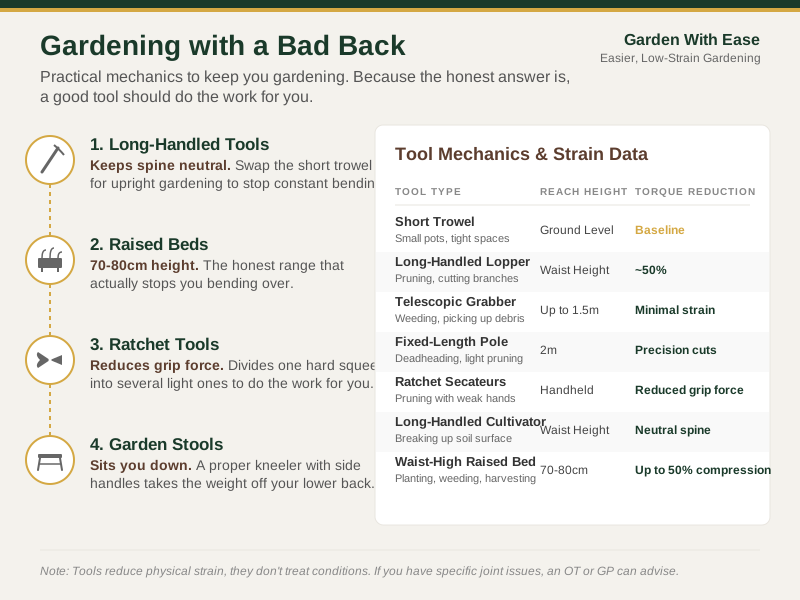
| Tool Type | Reach Height | Torque Reduction | Best For |
|---|---|---|---|
| Short Trowel | Ground Level | Baseline | Small pots, tight spaces |
| Long-Handled Lopper | Waist Height | ~50% | Pruning, cutting branches |
| Telescopic Grabber | Up to 1.5m | Minimal strain | Weeding, picking up debris |
| Fixed-Length Pole | 2m | Precision cuts | Deadheading, light pruning |
| Ratchet Secateurs | Handheld | Reduced grip force | Pruning with weak hands |
| Long-Handled Cultivator | Waist Height | Neutral spine | Breaking up soil surface |
| Waist-High Raised Bed | 70-80cm | Reduced compression | Planting, weeding, harvesting |
Start With the Biggest Lever
Every fix in this guide works the same way – it moves a fulcrum, lengthens a lever, or raises a surface so your spine stops doing a job it was never built for. You don’t need all of it at once. Pick whichever pain point bites hardest in your own routine and fix that first: a telescopic lopper if stooping over the borders is what wrecks your afternoon, or a waist‑high raised bed if it’s the weeding and planting that finishes you off.
If you are looking for more ideas on adapting your setup, have a read through the rest of the blog for practical, tool-focused advice.
If you have any lingering questions, feel free to drop me a line on the contact page – always happy to talk through what’s worked well and what’s been a bit of a bodge. Keep the soil turning, keep the back straight, and enjoy the garden for many seasons to come.
Explore More Topics
Go deeper on specific topics:
- Best Garden Kneelers and Stools for Sore Knees UK
- Long-Handled Garden Tools to Prevent Back Pain
- Waist-High Raised Beds: Ideal Heights for Wheelchairs
- How to Weed Without Bending Over: Tools and Techniques
Further Reading
If you want to go beyond tool recommendations, these cover the broader picture:
- Arthritis UK - Joint Protection Advice
- Thrive - Gardening for Health
- NHS - Back Pain Advice