Low-Maintenance Garden Setups to Reduce Physical Chores
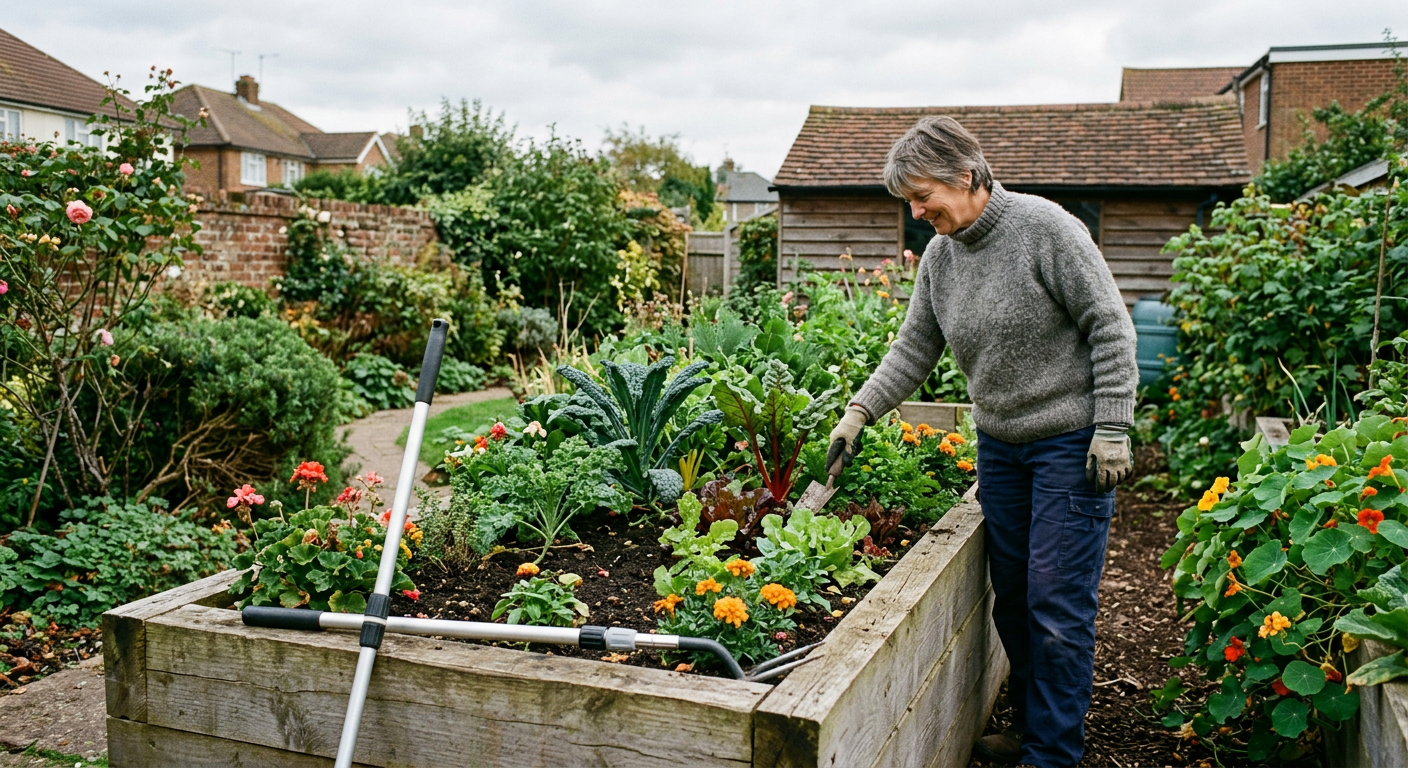
Most “low-maintenance garden” advice is really plant advice: pick drought-tolerant shrubs, skip the fussy roses, mulch instead of weed. None of that touches the real problem if it’s your knees and back doing the complaining rather than your watering can. What actually decides whether an afternoon outside costs you the next morning is the layout itself — how high you’re working, how much soil you’re expected to turn over, and what’s underfoot. Get those three things right and the planting list becomes almost an afterthought.
How Does a No-Dig Garden Reduce Physical Strain?
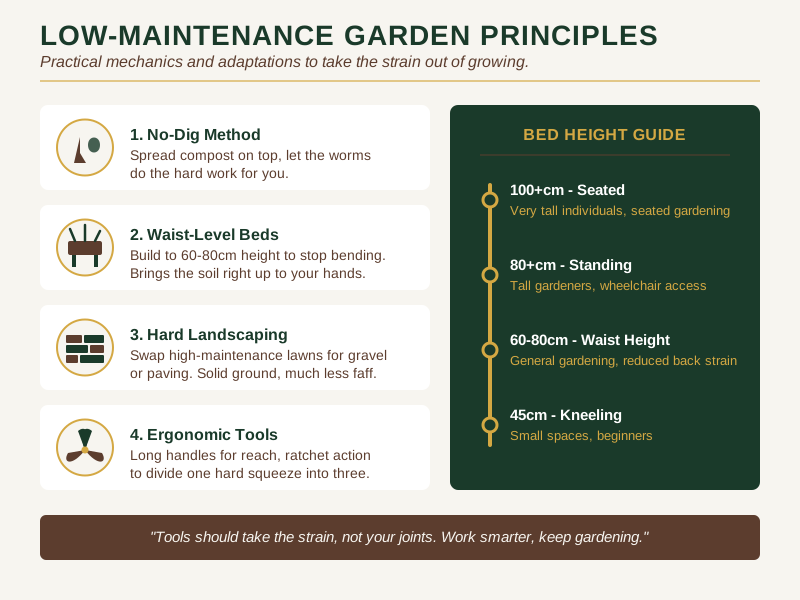
A no-dig approach drastically cuts physical strain by replacing heavy shovelling with a simple top-dressing routine. Instead of forcing a spade into compacted soil and lifting heavy clods, you simply spread a layer of compost or well-rotted manure on the surface and let the worms do the mixing, which keeps your back straight and your workload light.
📺 Watch: NO DIG Gardening Explained in 6 Minutes — Huw Richards
According to the Royal Horticultural Society, no‑dig methods significantly reduce soil disturbance, which means far fewer back‑twisting moments and a much lighter load to haul. In practice you only need a wheelbarrow and a trowel, both of which can be chosen with long‑handled, lightweight versions to keep the lift short.
Traditional double-digging on a full allotment plot can easily mean hours of shovelling and a sore back that won’t let you sit straight by the end of it. Switching to a 5-cm thick compost blanket instead cuts that kind of weekly labour right down, with far less toll on your back.
The honest answer is, it isn’t a magic cure – you still need to move the organic matter – but the strain is dramatically lower. If you’ve got a small garden, a simple 20‑litre bucket of compost on a wheeled trolley does the trick without a back‑breaking lift.
Raised and Waist‑Level Planting
A garden that forces you to stoop is a back‑breaker. The “waist‑high” rule suggests raised beds sit between 60 and 80 cm tall – high enough to work at your natural waistline, low enough that you don’t need a ladder.
Charities like Thrive, who specialise in gardening for health, often highlight that working at waist height drastically cuts lower-back strain because your spine stays in a neutral position rather than hunching over. Build the bed from timber, brick, or prefabricated kits; the material choice is less important than getting the height right.
A too‑low bed turns a simple sowing job into a kneeling marathon: anything much under 60 cm still forces constant bending. Raising the frame to around 70 cm turns the same task into a ten‑minute stand‑up job.
Pair the bed with a kneeler‑stool that flips from a padded kneeler to a sturdy seat. This dual‑use piece lets you kneel for weed removal and sit comfortably when planting taller varieties. You can find plenty of tool reviews covering these over on the blog.
In heavy UK clay, raised beds also improve drainage, meaning less water‑logging and fewer trips to the pump. The combination of height and soil health makes the garden far more forgiving on sore joints.
Hard Landscaping and Ground Cover
Lawn is the one part of the garden that bills you on a schedule – every week, rain or shine, for the best part of six months. Replace enough of it with gravel, decking, or paving and that recurring charge disappears, along with the kneeling needed to weed a grassy border.
Swapping lawn for gravel cuts your mowing time to zero, and the hard surface eliminates the need to push a heavy mower altogether. The trade‑off is the occasional weed that finds its way into the gaps.
The “weeding in gravel” problem is real – you can’t just pull a weed from a low crouch without straining something. The solution is a long‑handled hoe or a lightweight weed burner. A 1.5 m steel hoe with an offset handle lets you stand upright while slicing through the surface, keeping the back straight.
Watering can become a bottleneck if you still lug heavy cans around. A simple drip‑line installed along the perimeter of your gravel area supplies a steady flow with minimal effort. The system can be fed from a small 5‑litre reservoir placed on a low‑level pallet, so you never have to lift more than a few kilograms.
A full-grass redesign means a sore back after every weekly mow. Switching to a mixed gravel-and-perennial border instead cuts weekly maintenance down to a quick sweep and a brief hose-run, leaving knees and backs much happier.
Tool‑Empowered Maintenance
Even the smartest garden layout needs the right tools to stay low‑effort. Here are four rules that keep a garden manageable without much daily effort.
- Long‑Handle rule – A 1 m or longer handle on trowels, cultivators, and weeders keeps the work at waist height, removing the need to bend. Look for aluminium shafts; they’re light yet stiff enough for occasional heavy soil.
- Ratchet rule – Ratchet secateurs divide a tough cut into three to six light squeezes instead of one hard one. A decent pair costs roughly £15‑£25 and does what it says on the tin. Cheaper models often click only twice, meaning you still need a firm grip.
- Lightweight cordless rule – Cordless hedge trimmers and grass‑cutters save the hassle of dragging a cord, but weight matters more than the spec sheet lets on once your arm’s been up for ten minutes. The Bosch AHS 50‑20 LI (around £120‑150 with a battery) is a well‑reviewed 50cm cutter, but at roughly 2.5kg it’s heavier than it looks on the shelf. A budget Einhell GE‑CH 1846 Li (around £80‑90) actually comes in lighter, at about 2kg, with a slightly shorter 46cm blade – no bad trade if your arm tires faster than the hedge grows.
- Easy‑Grip rule – Tools with angled handles keep the wrist in a neutral position. The angled design means you can work from a kneeler or stool without twisting your forearm. A straight-handle spade can feel fine until the first cold snap, when the grip goes numb within minutes of hard ground work.
No single tool here does all the work on its own, but stack the long handles, the ratchet mechanism, and the lightweight cordless motor together, and the combined dent in a typical session’s workload is hard to ignore.
How to Convert a Heavy-Dig Border to a No-Dig Bed
If you want to stop turning the soil but already have an established border, you don’t need to dig it all out to start fresh. Here is how you transition to a low-strain setup.
1. Clear the worst of the weeds Use a long-handled hoe to slice off annual weeds at the base without bending. For deep-rooted perennials like dandelions, use a long-handled weed puller so you can lever them out while standing upright.
2. Lay down a cardboard base Cover the bare soil with plain, unwaxed brown cardboard, overlapping the edges by a good six inches. This blocks the light and naturally suppresses whatever weeds are left underneath, saving you hours of future weeding.
3. Add your compost layer Spread roughly 5 cm of peat-free compost or well-rotted manure directly over the cardboard. Do this in small batches using a lightweight bucket or a small wheelbarrow so you aren’t straining your lower back with heavy loads.
4. Plant straight into the top layer When you are ready to plant, just use a trowel to make a small hole in the compost layer, right down to the cardboard. The cardboard will rot down naturally over a few months, letting the roots push through into the soil below while doing the work for you.
Common Questions About Low-Strain Garden Setups
What is the best height for a raised bed to stop back pain? It depends on your own height, but as a general guide, 60 to 80 cm is the sweet spot. This brings the soil up to your natural waistline, meaning you can sow, weed, and harvest while standing completely upright with a neutral spine.
Can I still keep a lawn if my knees and back are playing up? Yes, but you need to remove the heavy pushing. Swap a heavy petrol mower for a lightweight cordless model, or consider a robotic mower if the budget allows. Alternatively, reduce the size of the lawn so it only takes ten minutes to cut, rather than an hour.
Do ergonomic tools actually make a difference? They do, provided they genuinely change the mechanics of the job. A ratchet secateur divides the force needed to cut a branch across several small squeezes, which genuinely saves a weak grip. However, tools labelled “ergonomic” just because they have a soft handle won’t stop your joints aching if the tool itself is still heavy.
Now you know what to look for – Download the Free Easier Gardening Tool Checklist to match the right kit to your garden set‑up.
Recommended Raised Bed Heights
| Height (cm) | Working Position | Best For |
|---|---|---|
| 45 | Kneeling | Small spaces, beginners |
| 60-80 | Waist height (standing) | General gardening, reduced back strain |
| 60-75 | Wheelchair or seated access | Leaves knee clearance underneath for a chair or wheelchair to pull in close |
| 90+ | Standing, no stoop | Very tall gardeners who want to avoid bending altogether |
Three Moves, One Strategy
Those three moves – cutting soil disturbance, working at waist height, and swapping high-maintenance surfaces for hard landscaping – are the whole strategy here. Pair them with long‑handled, ratchet‑enabled, and lightweight tools, and you’ll find yourself spending minutes, not hours, in the garden – and your back and knees will thank you.
If you’re ready to audit your current set‑up and spot the low‑effort upgrades, grab our free checklist. It walks you through the key decisions, from bed height to tool choice, so you can start planning a garden that stays enjoyable even as your joints age.
Got a question or need a nudge in the right direction? Feel free to get in touch – always happy to help you think it through. You can also read more about this site’s approach on the about page. Keep planting, keep smiling, and let the garden do the heavy lifting for you.
Related Guides
For a complete overview, see our Tools for Gardening with Limited Mobility: Low-Effort UK Guide.