Ratchet vs Bypass Secateurs for Arthritic Hands: Which Actually Cuts Easier?
As an Amazon Associate I earn from qualifying purchases. This page contains affiliate links — if you buy through them, I earn a small commission at no extra cost to you.
There is a specific moment when the joy of pruning gets undercut by the pain of squeezing. Your hand cramps halfway through a rose stem. Your grip slips. You set the secateurs down and wonder whether this is the end of your gardening days. It isn’t. But the tool you’re using might be the problem.
This article explains why ratchet secateurs are the right choice for gardeners with arthritic hands or weak grip—and why bypass secateurs are still better for your plants. The mechanism is the key; once you understand how a ratchet multiplies your hand’s power, the decision almost makes itself.
The Two Main Types of Secateurs
Before getting into which one helps, it helps to know what you’re choosing between.
Bypass secateurs work like a pair of scissors. Two curved blades slide past each other, and the cut is clean—the kind of cut a living plant can heal quickly. They’re the standard recommendation for a reason: a clean cut means less risk of disease.
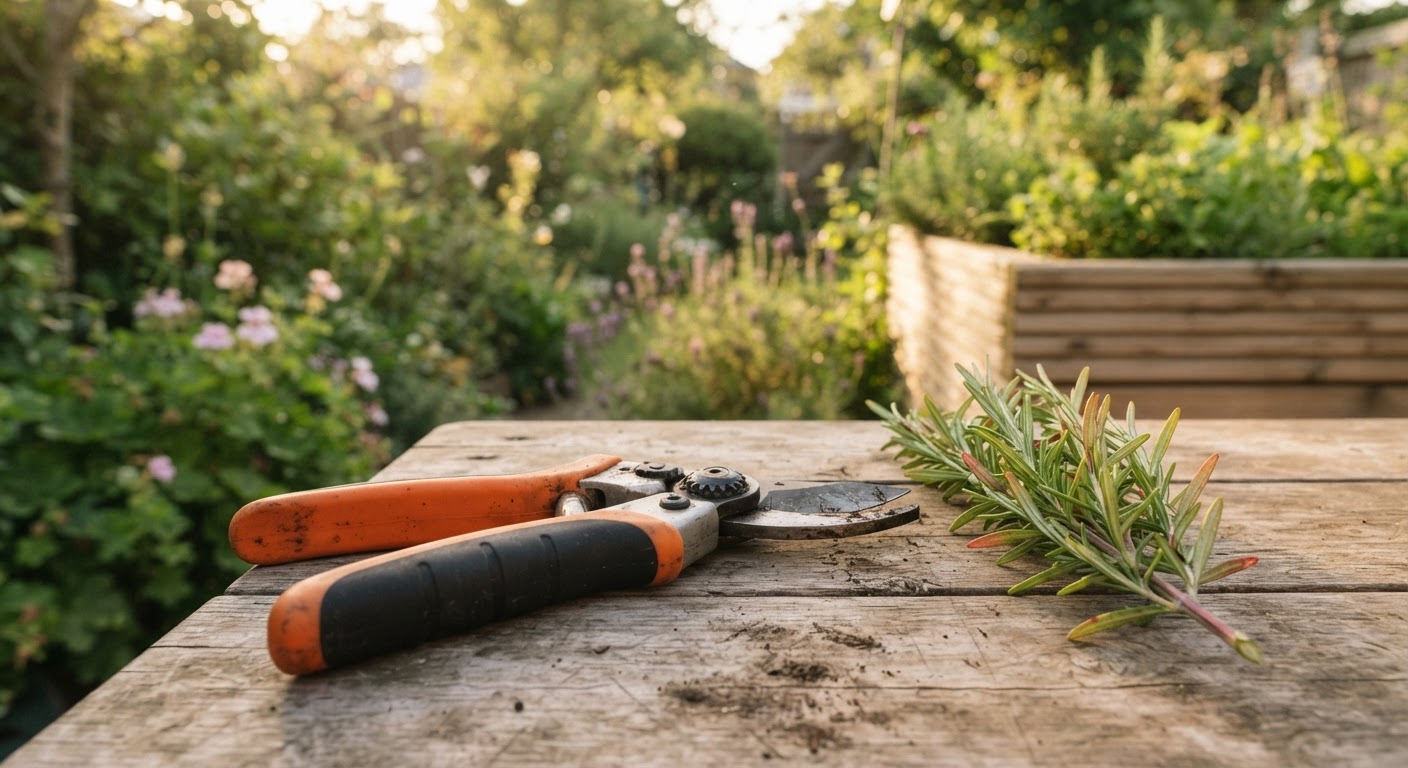
Ratchet secateurs work differently. One blade cuts down onto a flat anvil surface, and a ratchet mechanism lets you advance the cut in stages. You squeeze, the blade bites a little deeper, you release and squeeze again. The mechanism does the heavy lifting your hand can’t manage in one go.
The third type worth knowing about—briefly—is anvil secateurs. These also have one blade against a flat surface, but without the ratchet mechanism. They’re better at chopping through dead, woody material than bypass secateurs, but they crush living tissue the same way ratchet secateurs can. For arthritic hands, the ratchet is the point, not the anvil design.
Think of bypass secateurs like sharp scissors on tissue paper—precise, clean, no crushing. Ratchet secateurs are more like a saw doing the job of a pair of scissors. Slower, but the effort is nothing like the same.
Why the Ratchet Mechanism is the Difference
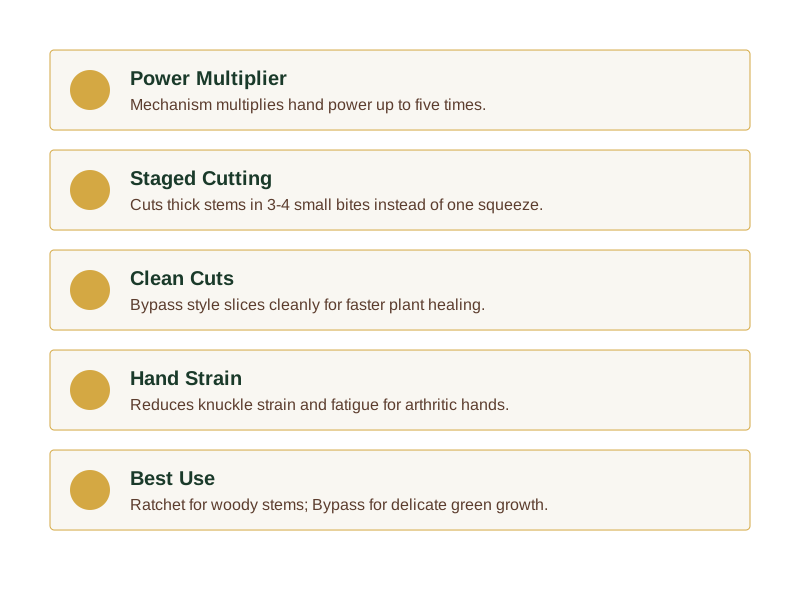
Here is the core of it. The ratchet mechanism multiplies your hand’s power by up to five times. That is not marketing language—it is a mechanical fact about how the ratchet distributes the cutting force across several squeezes instead of one. Your hand does not close fully. The mechanism takes the strain.
What that means in practice: stems up to 2cm thick—roughly the thickness of a mature herb stem—can be snipped through in three or four bites rather than one full-force squeeze. For someone whose knuckles protest at a full hand closure, that is the difference between finishing a pruning session and abandoning it.
Bypass secateurs require full hand closure to complete a cut. There is no ratchet, no power multiplication, no staged advance. You are relying entirely on grip strength. If your grip is strong and pain-free, bypass secateurs are better for plant health. If it is not—if arthritis, stiffness, or plain fatigue is the limiting factor—then ratchet secateurs are the tool that lets you keep gardening.
The RHS notes that a ratchet pruner takes less effort than most secateurs and specifically reduces strain on knuckles. Arthritis UK recommends tools with padded handles and notes that ratchet pruners reduce strain by requiring several bites instead of one big squeeze.
For arthritic hands, the call is straightforward: go straight to ratchet secateurs. The mechanism makes the difference, and once you understand it, the choice stops feeling like a gamble.
The Trade-Off: Clean Cuts vs. Ease of Use
Ratchet secateurs are not designed for delicate work. The anvil-style cutting action can crush the soft tissue of green stems rather than slicing cleanly through them. If you are pruning new growth on a rose, deadheading a hydrangea, or cutting soft herb stems, a bypass secateur gives you the clean cut that heals fast.
This is the honest trade-off. Ratchet secateurs take the strain off your hands. Bypass secateurs take better care of your plants. Neither does both well.
The speed difference matters, too. A bypass secateur completes a cut in one squeeze. A ratchet secateur needs three or four. For a light pruning session, that difference is negligible. For clearing a neglected border, it adds up.
The practical upshot: most gardeners with arthritic hands end up owning both. Ratchet for the woody stuff and the days when grip is failing. Bypass for the fine, living growth when your hands are having a good day. If you only have budget or space for one pair, ratchet is the more urgent purchase—it solves the pain problem. Bypass can wait.
What Gardeners with Arthritis Actually Say
Buyer feedback consistently points to the same three products as the main contenders.
The Felco 7 (paid link) is widely considered the gold standard. The revolving handle reduces cutting effort by around 30%, and owners with hand pain describe it as genuinely transformative for longer pruning sessions. The build quality is professional-grade; these are tools meant to last decades with replaceable parts. The catch is the price: premium for a reason, and the handles may feel too large for smaller hands. If you have larger hands and do a lot of pruning, this is the one worth saving for.
Check Felco 7 price → (paid link)
One product worth pulling out separately because it is so often mistaken for a ratchet: the Fiskars PowerGear (paid link) is not a ratchet secateur—it is a geared bypass pruner. The internal gears multiply the force of each squeeze, so it achieves a similar reduction in hand strain, but the cutting action is bypass (two blades sliding past each other), not anvil-and-ratchet. That matters here: you get the clean, plant-friendly cut of bypass secateurs with less effort than a standard bypass pruner, but you still have to close your hand fully to finish each cut—there is no staged advance. Owners praise the clean, powerful cuts and the way the geared mechanism reduces fatigue. The rotating handle is a love-it-or-hate-it feature—some find it genuinely comfortable, others find it awkward or catch their fingers on it. For frequent, repetitive pruning, the ergonomics pay off. For occasional use, it is worth trying before buying.
Buy Fiskars PowerGear on Amazon → (paid link)
Spear & Jackson ratchet secateurs are the accessible option that does the job when the mechanism works properly. Owners with arthritis, weak hands, or reduced grip strength report that they make pruning significantly easier than standard secateurs. The honest weak point is the ratchet mechanism itself; it can feel inconsistent, and some buyers report it failing to engage smoothly. For the price, it is a reasonable entry point, but the reliability gap compared to the premium options is real.
On a tighter budget, the Wilkinson Sword Ratchet Anvil Pruner (paid link) is lightweight and easy to use for thicker, woody stems. The trade-off is durability—reports of blade damage, snapped handles, and failed rivets show up more often than with the pricier options. Fine for light, occasional use, but less convincing as a daily driver.
Check Wilkinson Sword Ratchet Anvil Pruner price → (paid link)
The pattern across real-world reviews is consistent: the more you pay, the more reliable the mechanism and the better the ergonomics. But even the budget ratchet secateurs are doing something standard bypass secateurs cannot—they are letting people with weak or painful hands keep pruning.
How to Choose: A Simple Decision Matrix
If arthritis or grip is a concern, go straight to ratchet secateurs. That is the short answer.
The longer answer depends on your situation:
- If your hands are strong enough for standard secateurs on good days: keep a pair of bypass secateurs for clean cuts on living growth, and add ratchet secateurs for the harder days or thicker stems.
- If you have smaller hands: look for compact models. The Felco 6 is designed specifically for smaller hands and is worth seeking out if the standard Felco 7 feels too large.
- If you are on a tight budget: the Wilkinson Sword ratchet anvil pruner is the honest entry point—it will do the job for lighter use, though the durability is mixed. The Spear & Jackson is a step up and handles thicker growth better.
- If you want the best all-round tool for a healthy garden: bypass secateurs are the standard recommendation, but only if your hands can handle them pain-free.
The right tool is the one that lets you finish a pruning session without setting it down in frustration. If ratchet gets you there, ratchet is the answer.
Ratchet vs Bypass: Key Differences
| Feature | Ratchet Secateurs | Bypass Secateurs |
|---|---|---|
| Cutting Action | Anvil-style (blade on flat surface) | Scissor-like (blades slide past) |
| Power Source | Multi-stage squeeze mechanism | Full hand closure |
| Cut Quality | Can crush soft tissue | Clean cut for healing |
| Best For | Thick woody stems, weak grip | Delicate growth, plant health |
| Speed | Slower (3-4 squeezes) | Faster (1 squeeze) |
Frequently Asked Questions
Can I use ratchet secateurs for all pruning jobs?
No. Ratchet secateurs are best for thicker, woody stems and for anyone reducing hand strain. They are not ideal for delicate, green growth where a clean cut matters—bypass secateurs do that job better. Keep both if you can.
Are ratchet secateurs more expensive than bypass?
They can be, but not always. Budget ratchet models like the Spear & Jackson sit around £20–£30. Geared bypass alternatives like the Fiskars PowerGear (not a true ratchet, but a popular low-strain option) run roughly £30–£45. Premium models like the Felco 7 start in the low £60s and up, but offer professional build quality and replaceable parts that last for years. The gap in price reflects real differences in mechanism reliability and ergonomics.
Do ratchet secateurs dull faster?
Because they cut in stages, the blades may see more wear over time compared to the single-squeeze action of bypass secateurs. Regular sharpening matters for both types. A sharp blade is less effort to use regardless of mechanism—a blunt secateur makes everything harder.
The right tool does not just make gardening easier. It makes it possible. If your hands have been making the decision for you—if you have been setting down the secateurs because the squeezing hurts too much—then the ratchet mechanism is the thing that hands that decision back to you.
Now you know what to look for. If you want a guide to the specific tools that fit your grip, your budget, and your garden, grab the checklist—it walks through what to check before you buy, so you are not relying on a product page to make the call for you.
Download the Free Easier Gardening Tool Checklist and take the guesswork out of your next tool purchase.
Related Guides
Sources & Further Reading
Note: General guidance only, verify details with a qualified professional or official source.
As an Amazon Associate I earn from qualifying purchases. I only link tools I would be happy to put in my own basket.