Tools for Gardening with Limited Mobility: The Low-Effort UK Guide
As an Amazon Associate I earn from qualifying purchases. This page contains affiliate links — if you buy through them, I earn a small commission at no extra cost to you.
Most of the kit crowding a typical garden shed doesn’t earn its shelf space. A cheap anvil secateur that crushes stems instead of slicing them, a 15 kg petrol mower with a pull-cord your shoulder can’t take any more, a foam kneeling pad with nothing to push against when you need to get back up – none of it survives contact with a bad wrist, a stiff knee, or a back that’s stopped negotiating. This isn’t a list of everything on the market. It’s what’s left once you take the tools that make gardening harder off the table, and replace them with the small number that genuinely do the lifting for you.
What to Rule Out Before You Buy Anything
The garden’s biggest strain-culprits cluster into three areas: cutting tools, power tools, and support gear. In each, there’s a version that works against tired joints and a version that doesn’t – and ruling out the former does more for your wrists and back than any amount of extra kit.
Secateurs – Cross off anvil types first: they crush rather than cut, which can feel easier on a weak grip but leaves ragged, torn cuts that are genuinely worse for the plant. Bypass (scissor-type) blades cut cleanly but demand a firm squeeze through the whole stroke – exactly the motion a stiff hand struggles with. A geared or ratchet mechanism splits that squeeze into several light stages instead, which is the difference that actually matters.
Mowers & Trimmers – Rule out anything petrol-powered or pushing 15 kg; the pull-cord alone ends a mowing session early for a lot of people. Even the lightest cordless push mowers on the market sit around 7.5–8.5 kg, so “light” is relative – but that’s still roughly half a typical petrol mower’s weight, and there’s no cord to yank.
Kneelers & Stools – A flat foam pad with nothing to push against should be the first thing you cross off; without side handles, getting back up does more damage than the kneeling did. A stool that lets you work upright avoids the position altogether.
| Category | Standard (typical) | Ergonomic (recommended) | Key Mechanism |
|---|---|---|---|
| Secateurs | Felco 7 (paid link), 300 g, no ratchet | Fiskars PowerGear, ~350 g, geared cam mechanism | Gears multiply force through the thickest part of the cut |
| Mower | Honda petrol, 15 kg | Ryobi cordless, ~8 kg, 18–36 V | No pull-cord; roughly half the weight of a petrol equivalent |
| Kneeler | Basic plastic pad, no handles | Burgon & Ball Kneelo (paid link), ~250 g, side handles | Handles keep spine upright on standing |
If you’re curious how a raised bed ties into this, a waist-high bed does half the work of a good kneeler simply by bringing the soil up to you – another reason a plain kneeling pad is worth crossing off the list.
How Do You Use Garden Tools Without Straining Your Body?
To use garden tools without straining your body, you need to let the tool’s mechanics do the heavy lifting rather than your joints. That means swapping a tight power grip for a relaxed precision grip, using ratchet mechanisms to divide the force of a cut, and pushing from the hips instead of twisting the spine.
📺 Watch: 5 Gardening Changes You MUST Make at 60 (So You Can Still Garden at 80) — Garden Design Tips
The Grip
A “power grip” – thumb wrapped around the handle, fingers squeezing hard – is great for a hammer but a nightmare for tired hands on a secateur. Switch to a “precision grip”: thumb on the top of the handle, fingers resting lightly on the side. This lets the tool’s lever do the work while your hand stays relaxed.
The Ratchet Mechanism
When you hear that click, you’re actually letting the blade move a fraction with each squeeze. In practical terms, a four-stage ratchet reduces the force needed per squeeze to a fraction of a standard cut. To engage it, close the blades just enough to feel the first click, then open your hand slightly, and squeeze again until the second click. The tool does the rest, so you never have to yank hard.
Body Mechanics
Stand with feet shoulder-width apart, knees slightly bent, and let the weight of the tool transfer into your legs. For long-handled tools, push from the hips rather than the arms – think of it as a lever, not a weight. This stance cuts spinal twisting significantly compared with leaning over a short-handled spade.
Stand-up tip: When pruning a high hedge, use a telescopic pole but keep it under 2 metres; beyond that, you lose the fine control needed for a clean cut and the leverage starts to work against your shoulders.
The tools are only half the story – the garden’s layout dictates exactly how often you’ll need to bend, stretch, or kneel. A few layout changes rule out whole categories of strain before a single tool comes into it.
📺 Watch: Easy, low maintenance wildlife garden tips - for a beautiful wild garden — The Middle-Sized Garden
Raised Beds
A waist-high bed (roughly 60–80 cm tall) lets you work while standing, eliminating the need to kneel or stoop. It’s the most effective single change for a bad back. Build one from reclaimed timber for roughly £150, or buy a ready-made kit starting at about £200.
Tool Storage
Store your most-used items on a low wall shelf or a rolling trolley at waist height. No more bending to fetch a trowel from a garden shed floor. Placing frequently-used items like secateurs and twine on a bench at roughly 90 cm keeps the whole afternoon’s work within easy reach.
Ground Level
Lay stepping stones or a compacted gravel path where you’d otherwise kneel on hard soil. It’s a simple, low-cost fix – a set of interlocking pavers runs about £30 for a small working area.
Quick checklist – three layout tweaks you can make today:
- Raise at least one bed to waist height.
- Install a waist-high tool trolley or shelf.
- Add stepping stones to high-traffic zones.
Here’s what’s actually worth spending on, once the kit above is crossed off – and the honest trade-offs of what’s left.
Secateurs
Fiskars PowerGear – This one’s a geared cam mechanism, not a true ratchet, but it does a similar job: the gears multiply force through the thickest part of the cut, giving a noticeably lighter squeeze even on thick branches. The ergonomic handle sits comfortably in a cold hand, which matters when the British weather turns crisp. The downside? It’s a bit pricier – roughly £35–£50 depending on the model – but the reduction in hand fatigue is spot on.
Spear & Jackson Ratchet – The honest budget pick, and a genuine ratchet mechanism this time. It delivers solid ratchet action for about £15–£20. I’ve seen a few units develop a loose click after a year of heavy use – not a deal-breaker, but something to watch.
Trowels
Peta Easi-Grip – The soft, upright handle keeps your wrist in a natural, unbent position, ideal for winter digging. It’s lightweight (around 160 g) and the stainless steel blade is sturdy enough for most soil. The only gripe is the handle can feel a touch short for taller users.
Radius Garden Heavy-Duty – For tougher soils, this steel-bladed trowel cuts through compacted earth with ease. It’s heavier (around 280 g) and a bit more expensive (£20–£30), but the extra weight actually reduces wrist strain by doing the driving for you on hard ground.
Kneelers & Stools
Burgon & Ball Kneelo – The side handles and padded memory foam keep the spine upright when pushing yourself back up, and the foam seat folds flat for storage. At roughly £45–£55 it’s not cheap, but the comfort level is not a con either.
Town & Country Garden Stools – A budget option at about £20–£30. It’s lightweight and portable, but the back support isn’t as robust – fine for occasional use, but not for long sessions.
Weeding Tools
Fiskars Xact – A long-handled, lightweight weeder with a curved blade that slices roots with a single pull. The ergonomic grip reduces wrist flexion, and it’s priced around £30–£40 (shop around; prices swing further than that at either end). The only downside is the blade can dull quickly on very tough weeds, so a spare sharpening stone is worth keeping handy.
Once you’ve ruled out the kit that works against you, matching what’s left to your own garden and budget is the easy part. You can always check our blog for more specific tool reviews and tests.
UK-Specific Buying Guide
When you’re ready to purchase, a few UK-only considerations can save you money and ensure safety.
UKCA or CE Marking – The rules here shifted again after Brexit: the UK government now recognises CE marking indefinitely for the vast majority of consumer goods sold in Great Britain, including cordless power tools and batteries, so you don’t need to hunt specifically for a UKCA symbol – a CE-marked mower or trimmer is still compliant. UKCA remains valid too; either mark is a reasonable sign a tool meets recognised safety standards. (Northern Ireland follows separate EU rules under the Windsor Framework.)
Charity Grants – Organisations such as Thrive and Arthritis UK champion gardening for health and sometimes signpost to grant schemes that cover adaptive equipment. A quick glance at their resources can help you offset the cost of a high-end ratchet secateur or a raised-bed kit.
When shopping, keep an eye on reputable UK retailers – B&Q, Dobbies, Wilko, and specialist horticultural suppliers like Burgon & Ball or Two Wests & Elliott. They often carry UK-certified stock and can advise on VAT status.
Frequently Asked Questions
Do ergonomic tools actually work?
Yes, because they change the mechanics of the task. By design, they lower the force you need to apply – a ratchet secateur divides the required hand squeeze across several lighter clicks, and a lightweight cordless mower removes the shoulder strain of pushing a heavy petrol engine. That’s the genuine mechanical difference: the tool does the work, not your joints.
Are ratchet secateurs worth the extra cost?
If your grip tires quickly or you have stiff hands, absolutely. The extra £15–£30 buys you a tool that lets you finish a pruning job without a painful hand cramp. The honest trade-off is a slightly slower cut, but the comfort gain makes it worth its salt.
Can I get VAT relief on gardening tools?
Sometimes, but it’s a narrower category than people expect. HMRC’s relief only covers goods designed solely for use by disabled people, not tools that are simply easier to use for anyone – something like a Peta Easi-Grip trowel can qualify because it’s marketed and designed for that purpose, but a general “ergonomic” kneeler aimed at the wider gardening market usually won’t. Check the product listing for “zero-rated” or ask the retailer directly before assuming an item qualifies.
What is the best tool for a bad back?
The honest answer is that a waist-high raised bed (around 60–80 cm) does more for a bad back than any single hand tool, because it completely removes the need to bend over. If you are working at ground level, a long-handled weeder or a sturdy garden kneeler with side handles to help you push up will take the brunt of the strain.
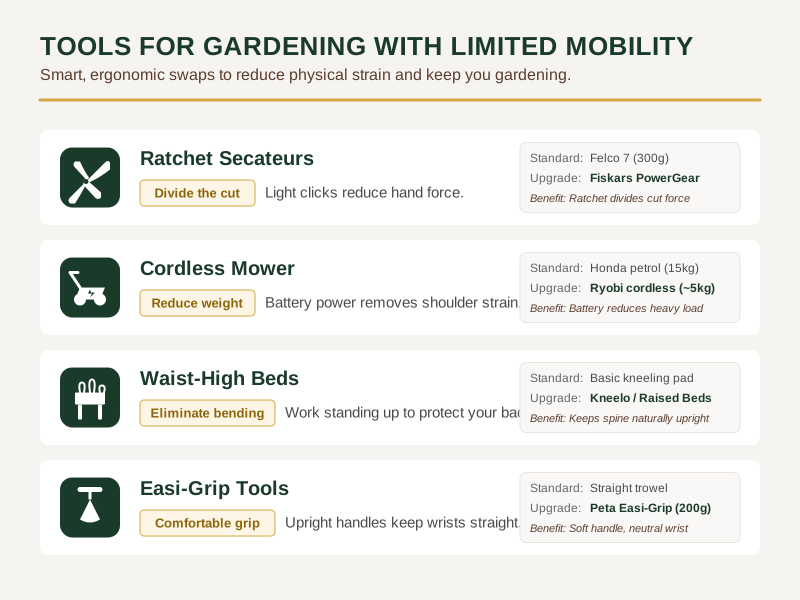
Ergonomic Tool Comparison
| Tool Category | Standard Option | Ergonomic Option | Key Benefit |
|---|---|---|---|
| Secateurs | Felco 7 (300g) | Fiskars PowerGear (350g) | Geared cam mechanism multiplies force on the cut |
| Mower | Honda petrol (15kg) | Ryobi cordless (~8kg) | No pull-cord; lighter than petrol equivalents |
| Kneeler | Basic pad | Burgon & Ball Kneelo (~250g) | Handles keep spine upright on standing |
| Trowel | Standard | Peta Easi-Grip (~160g) | Soft handle keeps wrist in natural position |
What’s Left When You Cut the Rest
Take away the anvil secateurs, the 15 kg petrol mower, and the handle-less kneeling pad, and what’s left is a short, workable list: a geared or ratchet secateur, a lightweight cordless mower, a kneeler you can actually push yourself up from, and a layout that raises the soil to you instead of the other way round. That’s the whole guide, really – not more kit, less of the wrong kit. Match what’s left to your own plot and budget, jot down the one or two tasks that cause you the most grief, and start there rather than replacing everything at once.
This is general guidance based on current UK rules and typical product specs, not a substitute for checking the details that matter for your own purchase – product dimensions, VAT eligibility, and safety certification are all worth confirming with the manufacturer or retailer directly before you buy. If you want to check anything above against the source rather than take my word for it, GOV.UK’s guidance on VAT relief for disabled people, Thrive’s gardening-for-health resources, and Arthritis UK’s gardening advice are all worth a look, especially before assuming a specific tool qualifies for VAT exemption or an adaptive-equipment grant.
If you’ve got any lingering questions or need a hand picking the right combination, feel free to get in touch. If you want to know more about how I adapted my own patch, you can read more about me here.
Explore More Topics
Go deeper on specific topics:
- Best Lightweight Lawn Mowers for Limited Mobility UK
- Easy-to-Carry Watering Cans and Hose Solutions for Weak Wrists
- Motorised Wheelbarrows and Garden Carts for Heavy Lifting
- Low-Maintenance Garden Setups to Reduce Physical Chores
As an Amazon Associate I earn from qualifying purchases. The products linked above are ones I’d use or recommend in my own garden.